

A beginner-friendly guide | Prices checked as of November 2026
A business cell phone is a mobile phone you use mainly for work, usually paired with a mobile plan for calls, texts, and data. You can buy a phone and plan just for the business, or let your team use their own phones with a separate business number.
The right business cell phone keeps work calls apart from personal ones, keeps you reachable on the road, and helps protect company information. Many small business owners start with one or two lines and add more as the team grows.
Choosing is not only about the phone. Plans differ in price, coverage, data limits, and contract terms, so the best setup for one company may not suit another.
In this guide, you will learn what a business cell phone is, how to separate work and personal calls, which phone number to use, how to pick a phone and plan step by step, what it costs, and what risks to expect.
Quick facts
Typical plan cost: Around $40 per line per month for basic plans (one guide), with one 2026 review listing a major carrier from $65 per user or line. As of November 2026, varies by region; check current pricing.
Time to set up: Varies by carrier and by whether you move an existing number; figures vary, so check current sources.
Difficulty: Easy for most small businesses.
Skills needed: No technical skills, only basic phone and app use.
What you need: A list of who needs a line, a budget, and coverage where your team works.
Best for: Owners, field teams, and staff who work away from a desk.
What Is a Business Cell Phone?

A business cell phone is a phone and mobile plan set up for work use. It can be a new phone bought for the company, or a phone you already own that is linked to a business plan or a business number.
Some sources describe a business cell phone as one built for professional use, combining secure connections, durable hardware, and work apps. In practice, most small businesses do not need special hardware. What matters more is the plan, the number, and how well the setup fits the way you work.
Business Cell Phone vs Personal Phone
A personal phone is set up for your own life: your contacts, your apps, your photos. A business cell phone keeps work in its own space, so customers call a number that belongs to the company and your personal calls do not mix with it.
This also helps when someone leaves the team. A company-owned number and account stay with the business, instead of leaving with the employee.
Business Cell Phone Plans vs Personal Plans
A business cell phone plan is a mobile plan designed for companies that need voice, text, and data for employees. One review explains that, unlike personal plans, business plans often add features for team collaboration, device management, and account administration that can grow with your team.
Higher tiers may add extras such as call recording, device security controls, or priority network access when the network is busy. Not every plan includes these, so compare what each one offers.
Can I Use My Personal Cell Phone for Business?

Yes, many small businesses do, especially when they are just starting out. It saves money and avoids carrying two phones. But it works best with a few safeguards.
One source on business cell phones notes that you can use a business phone with personal accounts, but only with strict security habits that keep work and personal data separate and protected.
Here are the main things to think about before you use one phone for both:
- Privacy: If customers have your personal number, they can call you at any hour, and your private number is no longer private.
- Records: Mixing personal and business calls, texts, and bills can make bookkeeping harder. Ask an accountant how to handle expenses. This is general information, not financial or legal advice; consult a qualified professional.
- Employee phones: If your team uses their own phones for work, set clear rules about what company data can be stored on them and what happens if they leave.
- Security: A lost personal phone with work email and customer data on it is a bigger problem than a lost phone with only personal photos.
If these points worry you, a second number or a separate business plan is a better choice.
How to Separate Work and Personal Calls on One Phone
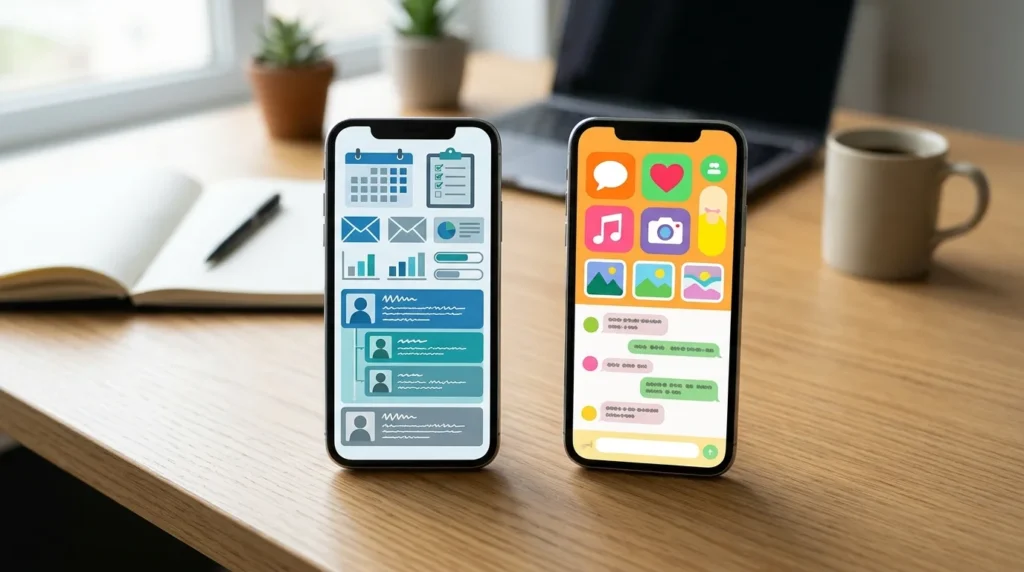
You do not always need a second phone. There are a few common ways to keep work and personal calls apart on a single device.
- A virtual business number: This is an extra number that rings on your existing phone through an app. Customers call the business number, and you see on screen that it is a work call.
- A second SIM or second line: Some phones can hold two numbers. One review of business numbers notes that a dedicated business line service and a second SIM can give you many of the same benefits.
- A toll-free or local number forwarded to your mobile: Calls to the business number ring your phone, while your personal number stays hidden.
- Separate work apps and profiles: Keep work email, messaging, and files in separate apps or a work profile where your phone supports it.
- Do not disturb schedules: Set quiet hours so that work calls and notifications stop when your day ends.
Start with a virtual business number if you want the lowest effort. It takes only a few minutes to set up with most providers, though timing varies.
Which Phone Number Is Best for Business?
The best business number depends on who calls you and where they are. There are three common choices.
Local Number
A local number uses an area code from your city or region. It can feel familiar to nearby customers and works well for shops, trades, and service businesses with a local customer base.
Toll-Free Number
A toll-free number does not tie your business to one place. It can make a small company look established, and customers do not pay to call. One guide suggests a toll-free or virtual number can be a good way to keep business calls separate from personal calls. Toll-free numbers can cost extra, and rules vary by country.
Virtual Business Phone Number
A virtual business phone number is not tied to a particular phone or SIM card. It works through an app or the internet and can ring on your mobile, a computer, or several team members at once.
This is a flexible choice for new businesses. You can often pick a local or toll-free number, forward calls, and add voicemail. The trade-off is that call quality depends on your internet or mobile data connection.
Second Phone Number for Business
A second phone number for business simply means you have an extra number besides your personal one. You can get it through a virtual number service, a dual-SIM phone, or a business plan with extra lines.
The main benefit is separation. You can answer work calls in a professional way, send them to voicemail after hours, and share the business number freely without exposing your personal one.
If you need more than a number, such as call menus, team routing, and shared voicemail, look at a full cloud business phone service instead. It is built for teams, while a business cell phone is built around one person with one device.
How to Choose a Business Cell Phone, Step by Step

Follow these steps in order. They help you avoid paying for things you do not need.
Step 1: Research How Your Business Uses Mobile Communication
Start with how your team really works. Consider how they usually communicate with customers. Are most calls handled while traveling, inside a van, or at a service counter? Do they rely more on text messages, or do they regularly send photos and documents? Also, consider whether they often work in areas with weak mobile signals.
Write down how many people need a line, how much data they use, and which tasks they do on the phone. A delivery driver and an office manager need very different setups.
Step 2: Consider Your Security Needs
Business phones often hold customer names, emails, payment links, and work accounts. Think about what would happen if one were lost or stolen.
Basic protections include a strong passcode, automatic updates, device encryption where available, and the ability to lock or wipe a lost phone. Larger teams may want device management tools. If you handle sensitive customer data, check any rules that apply in your country or industry. This is general information, not legal advice; consult a qualified professional.
Step 3: Research the Apps You Need
List the apps your team uses every day, such as email, calendar, messaging, accounting, scheduling, or a CRM. Make sure they work well on the phone you choose, and that older apps are supported.
If you also want a business number app, check that it works on your phone and with your plan. Some providers include an app for calls and texts in their plans.
Step 4: Consider Organization Tools
Organization tools help the phone support the business. Look for shared contacts, calendar sync, voicemail transcription, call forwarding, and notes about customers.
If several people share one number or take calls for each other, you may need shared inboxes or call routing. A single phone usually cannot do this alone, which is when a cloud phone service becomes useful.
Step 5: Check Coverage Maps
Coverage decides whether calls drop. Carriers publish coverage maps on their websites. Use them to check the places where you and your team actually work: the office, home, job sites, and travel routes.
Maps are estimates, not guarantees. Ask colleagues or neighbors who use the same carrier, and use a trial or money-back period if one is offered, so you can test calls and data where you really need them. Coverage varies by location.
Step 6: Check Battery Life
A phone that dies by afternoon is a problem when customers are calling. Read independent reviews for real-world battery tests, and think about how heavily the phone will be used: navigation, hotspot use, video calls, and constant calls drain batteries fast.
A battery case or portable charger is a cheap fix for heavy use. If your team works long shifts, battery life should rank near the top of your list.
Step 7: Compare Cost
Compare the phone price, the monthly plan price, and any fees together. A cheap phone on an expensive plan, or the reverse, can cost more over time. The cost section below gives ranges to start from.
Step 8: Test and Read the Contract
If you can, try the phone and plan before you commit. Then read the contract for length, cancellation fees, phone payment terms, and what happens if you want to switch. Ask for the full price in writing.
Which Cell Phone Is Best for Business?
There is no single best business cell phone. One guide says choosing the best cell phone for business is less about the phone itself and more about how well your setup supports how you work. Review sites also disagree, so use them as a starting point, not a final answer.
Best Smartphones for Work: What to Look For
Instead of chasing a model name, compare these hardware points:
- Software updates: Phones that keep receiving security and system updates are safer for business use.
- Battery: Look for reliable all-day batteries in independent reviews.
- Storage and speed: Enough storage for work apps, documents, and photos, and a processor that does not slow down with several apps open.
- Durability: If you work outdoors, on job sites, or in a workshop, a rugged phone or a strong case may be worth it.
- Security features: Fingerprint or face unlock, encryption, and remote lock or wipe.
- Dual SIM or eSIM: Useful if you want one phone with two numbers, one personal and one for business.
- Camera and microphone: Matter if you send photos of work or take many calls in noisy places.
Most people will compare an iPhone and an Android phone. Both can work for business. Choose the one that fits your apps, your team’s habits, and your budget. If your team already uses one kind, sticking with it makes support easier. Prices vary by region and change often, so check current listings.
Business Cell Phone Plans and Deals

A business cell phone plan covers the monthly service: calls, texts, and data. The phone itself may be bought outright, paid in installments, or already owned if you bring your own device.
What to Compare in a Plan
- Data: Business sources suggest unlimited data suits teams with several employees or heavy phone use, while light users may do fine with limited data.
- Hotspot data: Matters if your team shares the phone’s internet with a laptop.
- Number of lines: Price per line often drops as you add lines, but check the rules.
- Features included: Voicemail, call forwarding, caller ID, and conference calling are common. Extras like device management cost more on some plans.
- Bring your own phone: Some carriers let you keep your current phone. Check compatibility.
- Contract and fees: Look for activation fees, device payments, and early cancellation costs.
What Is the Best Cell Phone Service for Business?
It depends on where you work, because coverage differs by place. Reviews often name large carriers such as AT&T, Verizon, and T-Mobile, but different reviewers pick different winners. One 2026 review picks Verizon as the best overall for small businesses after comparing price, coverage, hotspot data, and features. Others rank different providers first.
All of these are US-focused. If you are in another country, compare the carriers available where you live and check their business plans directly.
Deals and Promotions
Carriers often advertise deals for new business customers, such as discounts on phones, bring-your-own-device offers, and military discounts. Before you sign, read what the deal needs: a new line, a long contract, a trade-in, or monthly bill credits that stop if you leave early. A big headline discount can cost more than a plain plan with no strings.
Business Cell Phone Plan or Business Phone Service?
A business cell phone plan puts a phone number on a mobile device. A business phone service is a cloud system, usually through an app, built for teams. It gives each person a number, call routing, menus, and shared voicemail. Many businesses use both: mobile plans for staff on the move and a cloud service for the main business number.
Business Cell Phone Cost
Business cell phone cost has three parts: the phone, the monthly plan, and fees. The figures below come from published sources as of November 2026, vary by region, and change often. Check current prices before you decide. This is general information, not financial advice; consult a qualified professional for budgeting decisions.
Monthly Plan Prices
One guide says basic business cell phone plans average around $40 per line per month, though prices vary widely by features. One 2026 comparison lists a major carrier’s entry business plan starting at $65 per user or line. Treat these as examples, not quotes.
Prices are usually lower per line when you add more lines, but carriers set their own rules, so ask for a written quote for the exact number of lines you need.
Phone Prices
Phone prices vary a lot by model, storage, and where you buy. Carriers often offer monthly device payments, which spread the cost but can lock you into a contract. Buying a phone outright, or using one you already own, can keep your plan flexible. Figures vary; check current sources.
Virtual Number and Cloud Alternatives
If you only need a separate business number, a virtual or cloud phone plan can cost less than a second mobile plan. One comparison puts cloud business phone plans at roughly $13.99 to $44 per user per month, and one review lists Google Voice Starter as a low-priced entry plan at $10 per user per month. Cheaper plans usually mean fewer features.
Hidden Fees
Published prices often leave out taxes, fees, and add-ons. One source estimates total cost can run 20 to 40 percent above the advertised rate once mandatory fees are included. That is one estimate, not a rule. Ask for every fee in writing.
The Best Way to Answer Business Phone Calls
A good phone and plan help, but how you answer matters just as much. These habits work for most small businesses:
- Answer promptly and greet clearly. Say your business name and your own name.
- Use a short script. Have a few lines ready for common questions so callers get consistent answers.
- Record a professional voicemail greeting. Say your business name, your hours, and when you will call back.
- Return missed calls quickly. A fast callback shows customers you care.
- Use a business number. When the screen shows a work call, you can answer in the right tone.
- Silence the noise. Step away from loud places, or use headphones with a microphone.
- Use does not disturb after hours. Send late calls to voicemail instead of answering when you are off the clock.
Risks and Challenges

A business cell phone setup helps in many ways, but it has downsides. Results vary by provider, plan, and region.
- Weak coverage: A carrier that looks good on paper may have poor signal where you work. Test before you commit if possible.
- Contracts and device payments: Phone installment plans and promotions can keep you tied to a carrier. Leaving early may cost you.
- Mixing personal and business: Using one phone for both can blur privacy, records, and security.
- Lost or stolen phones: A lost phone with work accounts is a risk. Use a passcode, updates, and remote lock or wipe.
- Hidden fees: Taxes, activation fees, and add-ons can raise your bill above the advertised price.
- One person, one device: A single phone is hard to share across a team. For shared calls and routing, a cloud phone service may suit you better.
- Legal and tax rules: Rules about recording calls, handling customer data, and expense records differ by country. This is general information, not legal advice; check local requirements or consult a qualified professional.
Pro Tips

- Separate early. Get a business number from day one, even before you hire anyone.
- Check coverage where you work, not just where you live.
- Ask for a full written quote that lists every charge.
- Compare the phone price and the plan price together.
- Turn on security basics: passcode, updates, and remote lock.
- Test the apps you need before you buy.
- Review your plan every few months and drop unused lines or extras.
- Keep your old number when you switch, and ask whether the provider can move it for you.
Frequently Asked Questions
Which cell phone is best for business?
It depends on your work, your apps, and your budget. Compare software updates, battery life, storage, security features, and durability instead of choosing only by brand. Both iPhone and Android phones can work well for business.
What is the best cell phone service for business?
The best service is the one with strong coverage where you and your team work, at a price you can afford. Reviews often name large carriers and disagree on a winner. Check coverage maps, compare business plans, and test if you can.
Which phone number is best for business?
A local number suits local customers, a toll-free number suits a wider audience, and a virtual number is flexible and can ring on several devices. Pick the one that fits who calls you.
Can I use my personal cell phone for business?
Yes, many small businesses do. To protect your privacy and records, add a separate business number and keep work apps and data apart from personal ones. If employees use their own phones, set clear rules for company data. This is general information, not legal advice.
How do I separate work and personal calls on one phone?
Use a virtual business number, a second SIM or eSIM line, or a forwarded toll-free or local number. Keep work apps in their own space, and use do not disturb after hours.
How much does a business cell phone plan cost?
It varies. As of November 2026, one guide puts basic plans around $40 per line per month, and one review lists a major carrier’s entry plan from $65 per user or line. Prices vary by region and change often, so check current pricing. This is general information, not financial advice.
What is the best way to answer business phone calls?
Answer promptly, state your business name, and keep a short script ready. Use a professional voicemail greeting and return missed calls quickly.
Do I need a second phone number for business?
Not always, but it is a simple way to protect your personal number and look professional. A virtual number or a second line works for most small businesses.
Conclusion
A business cell phone helps you stay reachable, keep work and personal life apart, and protect company information. For many small businesses, the simplest start is a separate business number on a phone you already own, then a dedicated plan as the team grows.
Before you choose, think about how your team uses mobile communication, check security needs, test coverage where you work, and compare phone and plan costs together. Read the contract, ask for a written quote, and remember that prices and results vary by provider and region.
Take your time with the decision. A clear view of your needs, a trial period, and a careful look at the fine print will help you find a business cell phone setup that fits your business.