
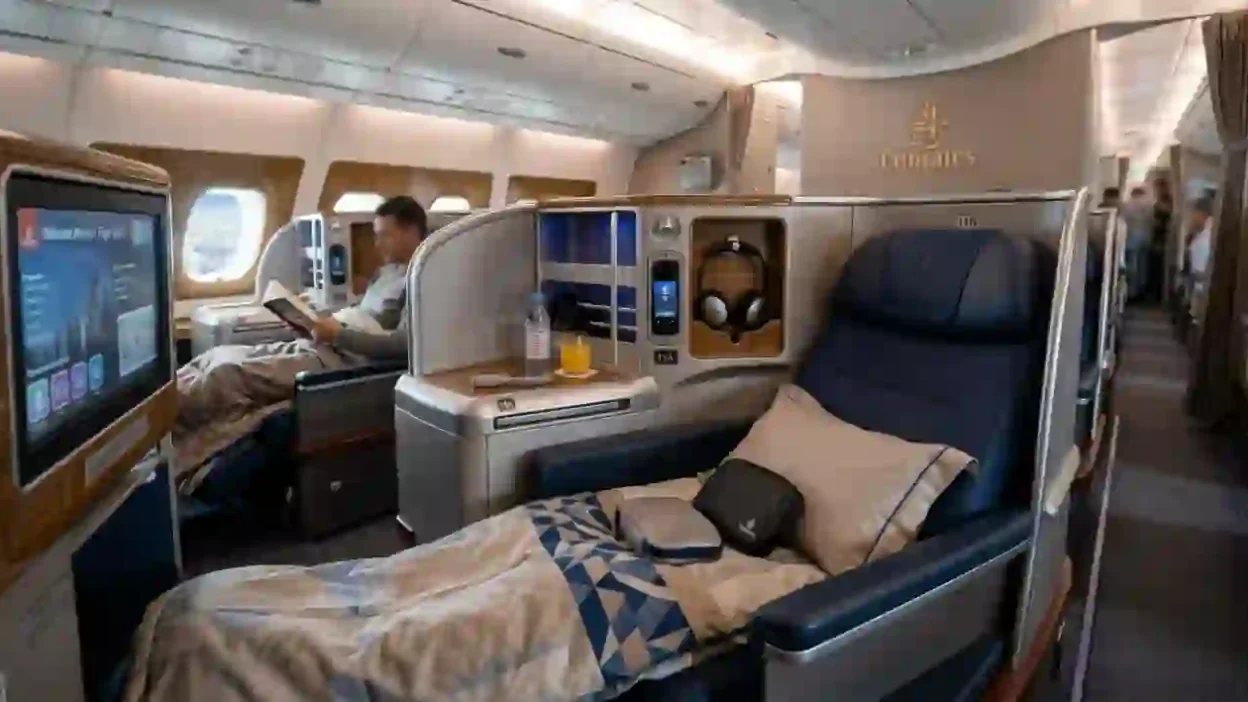
Business class seats are premium airline seats designed to provide more comfort, space, and privacy than standard economy seating. Depending on the airline and aircraft, they may include lie-flat beds, wider seats, extra legroom, upgraded meals, entertainment screens, and priority services. Some tickets also include airport lounge access and additional baggage allowances.
Key Takeaways
- Business class seats offer more space, comfort, and privacy than most economy seats.
- Some seats convert into fully flat beds, making overnight flights easier.
- Amenities vary by airline, aircraft, route, and ticket type.
- Business class tickets can cost several times more than economy fares.
- Comparing seat layouts and included benefits helps you choose the right flight.
Business Class Seats
Introduction
Business class seats offer a more comfortable way to fly, especially on long trips. They often provide extra space, better privacy, improved dining, and more personalized service than standard economy seating.
However, not every business class seat offers the same experience. Some airlines provide fully flat beds and private suites, while others focus on wider reclining seats, additional legroom, and upgraded onboard services. The aircraft and route can make a major difference, too.
Travelers often search for business class seats to understand what they get for the higher ticket price. They may also want to compare airlines, find the best seating arrangements, or decide whether an upgrade is worth the money.
In this guide, you’ll learn about common seat features, different seating styles, the benefits of flying business class, and how to choose a seat that fits your travel needs and budget.
What Do Business Class Seats Mean?
Business class seats are premium seats offered by airlines between economy and first class on aircraft with those cabin options. They are designed to make flying more comfortable through improved seating, additional personal space, and enhanced services.
On many long-haul international flights, business class seats recline into fully flat beds. This allows passengers to sleep in a horizontal position during overnight journeys. Some airlines also offer sliding doors, privacy panels, direct aisle access, and extra storage.
On shorter domestic flights, business class may feature larger reclining seats with more legroom but no lie-flat function. These seats can still provide a more spacious experience, although the difference depends on the airline and aircraft.
Business class is commonly used by business travelers, frequent flyers, couples, and vacationers who want additional comfort. It can be particularly useful for overnight travel, long international journeys, or flights followed by important meetings.
Why Choose Business Class Seats?
Choosing business class seats can make a long flight more comfortable and convenient. The benefits depend on the ticket and airline, so it’s important to check what your fare actually includes.
Common reasons travelers choose business class include:
- Better sleep: Lie-flat seats can help passengers rest during overnight flights.
- More personal space: Wider seats and extra room make it easier to relax.
- Greater privacy: Some cabin layouts feature enclosed suites or privacy screens.
- Improved dining: Many airlines provide upgraded meals, drinks, and flexible dining options.
- Priority services: Eligible tickets may include priority check-in, boarding, and baggage handling.
- Airport lounge access: Many international business class fares include lounge entry, subject to the airline’s rules.
- A more productive trip: Extra space and a quieter environment may make reading or working easier.
These benefits can be valuable when arriving rested matters. However, the higher fare may not be worthwhile for a short flight where you spend little time in the seat.
10 Best Features to Look for in Business Class Seats
Instead of choosing a flight based on the cabin label alone, compare the features that matter most to you. These 10 features can help you evaluate different business class options.
1. Lie-Flat Seats
Meaning: Lie-flat seats convert into a horizontal sleeping surface. They are especially common on long-haul international routes, where passengers may spend several hours sleeping onboard.
Best for: Overnight flights, long-distance travel, and travelers who need rest before arriving.
Example 1: A traveler flying from New York to London overnight may prefer a lie-flat seat to sleep more comfortably.
Example 2: Someone taking a long international trip can use a flat bed to rest before connecting to another flight.
Quick Tip: Confirm that the seat becomes fully flat. Some seats recline deeply without creating a completely horizontal bed.
2. Extra Legroom
Meaning: Extra legroom provides more space between your seat and the seat or structure in front of you. It can make sitting, stretching, and changing positions more comfortable.
Best for: Tall passengers, long flights, and travelers who dislike cramped seating.
Example 1: A tall passenger may appreciate additional legroom on a six-hour flight across the United States.
Example 2: A traveler recovering from a tiring day may find it easier to change positions when the seating area feels less restrictive.
Quick Tip: Check the actual seat dimensions rather than relying only on the business class label.
3. Wider Seats
Meaning: Wider seats provide more room across the seating surface. This can make it easier to sit naturally, move your arms, and relax during the journey.
Best for: Travelers who value personal space and those taking longer flights.
Example 1: A passenger flying internationally may prefer a wider seat for greater comfort during a full night in the air.
Example 2: Someone who often feels restricted in economy may find the extra width helpful on a lengthy trip.
Quick Tip: Compare published seat-width measurements, and remember that armrest design can affect usable space.
4. Direct Aisle Access
Meaning: Direct aisle access means you can reach the aisle without asking another passenger to move. Many modern business class cabins use layouts designed to provide this convenience.
Best for: Solo travelers, frequent bathroom visits, and passengers who want fewer interruptions.
Example 1: A window-seat passenger can get up during an overnight flight without disturbing a seatmate.
Example 2: A traveler working on a laptop can leave the seat more easily when it’s time to stretch.
Quick Tip: Review the aircraft’s seat map. Not every business class seat offers direct aisle access.
5. Privacy Screens and Suite Doors
Meaning: Privacy screens separate your seating area from nearby passengers. Some premium cabins go further by offering individual suites with doors or taller partitions.
Best for: Solo travelers, professionals, and passengers who prefer a more private environment.
Example 1: A consultant traveling to a conference may appreciate a private seating area for reading notes.
Example 2: A passenger on a long overnight flight may prefer a suite that reduces distractions from the aisle.
Quick Tip: Check whether suite doors are available on your exact aircraft. Some airlines offer different products across their fleets.
6. Adjustable Seating Positions
Meaning: Adjustable seats allow passengers to change the backrest, footrest, and other settings to suit their preferred position. Some models offer multiple presets for sitting, relaxing, and sleeping.
Best for: Travelers who like to change positions throughout a flight.
Example 1: A passenger can sit upright during dinner and recline afterward to watch a movie.
Example 2: Someone reading during a daytime flight can adjust the seat to support a more relaxed posture.
Quick Tip: Look for detailed seat descriptions or reviews that explain how the adjustment controls work.
7. Personal Entertainment Screens
Meaning: Personal entertainment screens provide access to movies, television shows, music, and other onboard content. Business class screens may be larger than those in some economy cabins.
Best for: Long-haul travelers, movie fans, and passengers who want entertainment without using their own devices.
Example 1: A family member flying overseas can watch a film during the middle portion of a long trip.
Example 2: A solo traveler may use the entertainment system to pass the time between meals and rest periods.
Quick Tip: Check screen size, headphone availability, and entertainment options if these features matter to you.
8. Convenient Storage Space
Meaning: Storage compartments provide places for small personal items, such as headphones, phones, glasses, and travel documents. Some newer business class seats include dedicated shelves or enclosed compartments.
Best for: Frequent flyers, business travelers, and passengers carrying several small essentials.
Example 1: A passenger can keep a phone and reading glasses close by without searching through an overhead bag.
Example 2: Someone traveling for work may find it convenient to store a notebook and charging cable within reach.
Quick Tip: Look at cabin photos to see how much accessible storage the seat actually provides.
9. Power Outlets and USB Ports
Meaning: Built-in power outlets and USB ports let passengers charge compatible devices during the flight. Availability and charging speed vary by airline and aircraft.
Best for: Remote workers, digital nomads, and travelers who rely on phones or laptops.
Example 1: An employee flying to a client meeting can keep a laptop charged while reviewing presentation materials.
Example 2: A passenger can recharge a phone before landing and arranging airport transportation.
Quick Tip: Confirm outlet type and power limits, and bring a compatible adapter or charging cable when needed.
10. Enhanced Dining and Service
Meaning: Business class often includes upgraded meals, improved drink options, and more attentive cabin service. The exact offering depends on the airline, route, and length of the flight.
Best for: Travelers who value onboard dining and a more personalized experience.
Example 1: A passenger on a long international flight may enjoy a multi-course meal before settling in to sleep.
Example 2: Someone traveling for a special occasion may appreciate a more relaxed meal service during the journey.
Quick Tip: Review the airline’s current menu and meal policies, especially if you have dietary requirements.
Business Class Seats Comparison Table
The following table compares common features you may encounter when shopping for business class flights.
| Feature | Best Used In | Tone of Experience |
|---|---|---|
| Lie-flat seats | Overnight and long-haul flights | Restful |
| Extra legroom | Long trips and taller passengers | Spacious |
| Wider seats | Extended journeys | Comfortable |
| Direct aisle access | Solo travel and frequent movement | Convenient |
| Privacy screens and suite doors | Private or focused travel | Secluded |
| Adjustable seating positions | Daytime and overnight flights | Flexible |
| Personal entertainment screens | Long journeys | Entertaining |
| Convenient storage space | Work trips and organized travel | Practical |
| Power outlets and USB ports | Device-heavy travel | Productive |
| Enhanced dining and service | Premium travel experiences | Refined |
Common Mistakes When Choosing Business Class Seats
Even expensive tickets can disappoint if you choose without checking the details. Avoid these five common mistakes.
1. Assuming every seat lies flat. Some business class cabins use reclining seats instead of fully flat beds. Check the seat type before paying extra for an overnight flight.
2. Ignoring the aircraft configuration. Airlines may offer different business class seats on different planes. A route’s aircraft can affect privacy, bed length, aisle access, and storage.
3. Choosing by price alone. A lower fare may have different baggage rules, change fees, or included services. Compare the full ticket conditions before making a decision.
4. Overlooking the seat map. Seats near galleys, lavatories, or busy walkways may experience more noise and activity. Review the layout to find a location that suits your preferences.
5. Assuming lounge access is always included. Access rules can depend on the airline, ticket type, operating carrier, and airport. Confirm eligibility before planning to use a lounge.
Frequently Asked Questions
1. Are business class seats worth the extra money?
Business class seats may be worth the extra cost if you have a long overnight flight, need to arrive rested, or value additional space and privacy. For short trips, the difference may be less important. Compare the fare difference with the specific benefits offered rather than assuming every premium ticket provides the same experience.
2. Do all business class seats turn into beds?
No, not all business class seats convert into beds. Many long-haul international cabins feature fully flat seats, while some domestic and shorter-haul services offer larger reclining seats. Always check the aircraft configuration and seat description for your specific flight before booking.
3. How much bigger are business class seats than economy seats?
Business class seats are generally wider and offer more personal space, but the exact difference varies by airline and aircraft. Long-haul business class often provides a substantial increase in space, while domestic business class may resemble an upgraded reclining seat. Compare seat width, pitch, and bed length when available.
4. What is the difference between business class and first class?
Business class generally offers upgraded seating, meals, and services compared with economy. First class, where available, may provide more exclusive suites, greater privacy, and more personalized service. However, products differ considerably between airlines, and some airlines operate only economy, premium economy, and business class cabins.
5. Can I choose my business class seat when booking?
Many airlines allow passengers to select a business class seat during booking or through the airline’s website afterward. Some fares may charge additional seat-selection fees or restrict certain seats. Availability also changes as other passengers select their seats, so it’s helpful to review the seating options early.
6. Are business class seats comfortable for sleeping?
Business class seats can be comfortable for sleeping, particularly when they convert into fully flat beds. Bedding, seat length, privacy, and cabin noise also affect sleep quality. If sleeping is your main priority, check the bed dimensions, seat layout, and available bedding rather than relying on the cabin name alone.
7. Do business class tickets include airport lounge access?
Many business class tickets include airport lounge access, especially on international routes, but the benefit is not universal. Rules may depend on the airline, airport, route, ticket conditions, and lounge capacity. Check your booking details and the operating airline’s lounge-access policy before arriving at the airport.
8. How can I find the best business class seats for my flight?
Start by identifying the aircraft operating your route, then compare seat maps, bed features, privacy, and aisle access. Read recent reviews for the exact cabin configuration and confirm whether the airline plans to use that aircraft. Finally, compare total ticket costs and included services to find an option that meets your needs.
Conclusion
Business class seats can make flying more comfortable by providing extra space, improved privacy, better seating options, and upgraded services. For travelers taking long international journeys, a fully flat bed and direct aisle access may be especially valuable. On shorter flights, wider reclining seats and additional legroom may be enough to make the journey more pleasant.
The best choice depends on what matters most to you. If sleeping is your priority, focus on lie-flat seats and bed length. If you prefer privacy, compare suite layouts and aisle access. For work trips, consider power outlets, convenient storage, and a comfortable seating position.
Before booking, check the aircraft, seat map, ticket conditions, and included benefits. Don’t assume that every airline offers the same features in business class.