
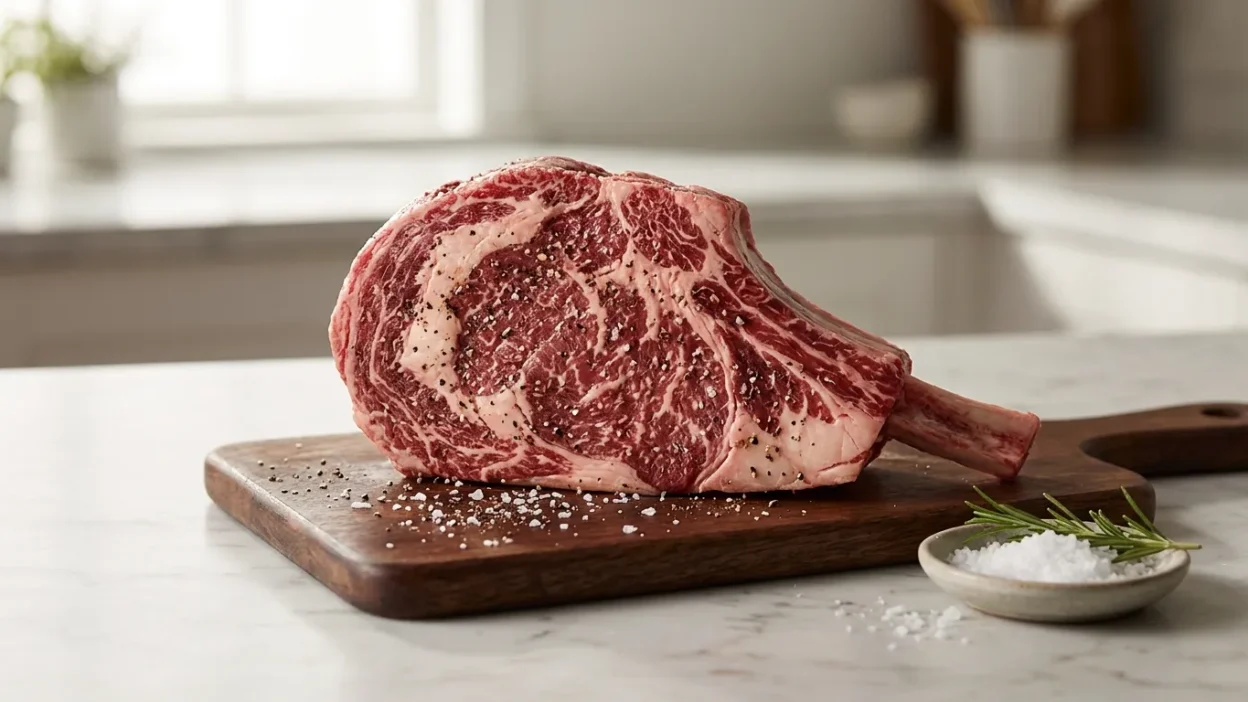
Few cuts of beef inspire as much devotion as the ribeye. Cut from the rib primal, it’s prized for its generous marbling the thin threads of fat woven through the meat that melt during cooking and baste the steak from the inside out. The result is a cut that’s rich, juicy, and deeply flavorful, forgiving enough for a weeknight dinner yet impressive enough for a special occasion.
This guide covers everything you need to know: how to choose the right ribeye, the equipment that makes a difference, every major cooking method, and the small details resting, slicing, seasoning that separate a good steak from a great one.
Understanding the Cut

Where Ribeye Comes From
Ribeye is cut from the rib section of the cow, roughly between the chuck and the short loin, spanning ribs six through twelve. This region does relatively little work compared to other parts of the animal, which is part of why the meat is so tender.
Bone-In vs. Boneless
A boneless ribeye is simply the steak with the rib bone removed, making it easier to cook evenly and slice. A bone-in ribeye often called a “cowboy cut” when the bone is frenched, or a “tomahawk” when the bone is left long and fully exposed keeps the rib bone attached. The bone doesn’t add much flavor directly, since it’s not in constant contact with the meat, but it does insulate the meat near it, which can affect cooking time slightly, and it makes for a dramatic presentation.
The Ribeye Cap
Within the ribeye sits the spinalis dorsi, commonly called the ribeye cap. It’s a separate muscle that wraps around the outer edge of the steak and is often considered the most flavorful, tender part of the entire cut due to its exceptionally high fat content. When buying, look for a ribeye with a good amount of visible cap still attached.
Marbling Explained
Marbling refers to the flecks and streaks of intramuscular fat running through the meat. Unlike the fat cap on the exterior of a steak, marbling is distributed throughout, and it’s the single biggest factor in ribeye’s flavor and juiciness. As the steak cooks, this fat renders and bastes the meat internally, which is why ribeye stays juicy even when cooked slightly past medium-rare something leaner cuts like filet mignon can’t do as well.
Grading and Buying Guide
USDA Grades
- Prime The highest grade, with abundant marbling. Makes up a small percentage of beef sold and is common in steakhouses and specialty butchers.
- Choice High quality with less marbling than Prime, but still very good. This is what you’ll most commonly find at grocery stores.
- Select Leaner, with less marbling, and generally less tender and flavorful. Ribeye’s high fat content makes it more forgiving at this grade than leaner cuts.
Wagyu and Kobe
Wagyu beef comes from specific Japanese cattle breeds known for extreme marbling. Kobe is a specific, legally protected type of Wagyu from Hyogo Prefecture in Japan. American Wagyu (often crossbred) is more widely available and more affordable, offering a step up in marbling over Prime without the extreme price of true Japanese Wagyu.
Grass-Fed vs. Grain-Fed
Grain-fed beef (the U.S. standard) tends to have more marbling and a richer, buttery flavor. Grass-fed beef is leaner, with an earthier, sometimes gamier flavor, and benefits from careful attention to avoid overcooking since it has less fat to keep it juicy.
Dry-Aged vs. Wet-Aged
Dry-aging involves storing beef uncovered in a controlled, refrigerated environment for weeks, which concentrates flavor and tenderizes the meat through natural enzymatic breakdown, but results in some moisture and trim loss (and a higher price). Wet-aging involves aging the beef in vacuum-sealed bags, which is more common, more economical, and still improves tenderness, though with a milder flavor change than dry-aging.
What to Look For When Buying
- Color Bright cherry-red, not brown or gray.
- Marbling Fine, even streaks of white fat throughout, not just around the edges.
- Thickness At least 1 to 1.5 inches. Thin steaks overcook before developing a proper crust.
- Smell Fresh, clean, never sour.
Equipment Needed

Pans
- Cast iron Retains and distributes heat exceptionally well, ideal for a deep sear. The classic choice for stovetop steak.
- Stainless steel Also excellent for searing and easier to monitor fond (browned bits) for pan sauces, though it heats slightly less evenly than cast iron.
- Carbon steel Similar heat retention to cast iron but lighter and quicker to heat.
Thermometers
- Instant-read thermometer Essential for checking doneness quickly without overcooking.
- Leave-in probe thermometer Useful for reverse-sear or oven methods where you’re tracking temperature over a longer cook.
Other Tools
- Sturdy tongs (avoid piercing the meat with a fork, which lets juices escape)
- A solid cutting board with a juice groove
- A wire rack for resting (keeps the bottom from steaming)
Grill vs. Stovetop vs. Oven
A grill adds smoky char flavor and works well for thicker cuts; a stovetop pan gives the most control and a reliable crust indoors; an oven is primarily used in combination with a stovetop sear (reverse searing) rather than alone.
Preparation
Thawing Safely
If frozen, thaw ribeye in the refrigerator for 24–48 hours depending on thickness. Avoid thawing at room temperature, which risks bacterial growth on the exterior before the inside fully thaws.
Bringing to Room Temperature
Let the steak sit out for 30–45 minutes before cooking. This promotes more even cooking from edge to center.
Drying the Surface
Pat the steak thoroughly dry with paper towels. Surface moisture creates steam in the pan, which prevents proper browning dry meat sears far better than wet meat.
Salting Techniques
- Immediate salting Salt right before cooking; simple and effective.
- 40-minute dry brine Salt and let sit uncovered; enough time for the salt to draw out moisture, dissolve, and reabsorb, seasoning the meat more deeply.
- Overnight dry brine Salt and refrigerate uncovered overnight; produces the driest surface (best for searing) and most deeply seasoned interior.
Marinades
Ribeye’s natural fat and flavor mean most steak purists skip marinades entirely, reserving them for leaner cuts. If used, keep it simple acidic marinades can actually break down texture if left too long.
Trimming
Some cooks trim excess exterior fat if it’s especially thick, but a moderate fat cap is worth keeping and rendering during cooking.
Seasoning Approaches
- Classic salt and pepper Coarse kosher salt and freshly cracked black pepper is the steakhouse standard, letting the beef’s natural flavor lead.
- Compound butter Softened butter mixed with garlic, herbs, or blue cheese, melted over the finished steak.
- Dry rubs Blends of paprika, garlic powder, onion powder, and other spices for a deeper crust flavor.
- Regional variations Argentinian-style with chimichurri, Korean-style with sesame and gochujang glaze, or Montreal steak seasoning for a peppery, garlicky crust.
Cooking Methods
Pan-Searing (Stovetop)
- Heat a heavy skillet over high heat until just smoking.
- Add a high-smoke-point oil (avocado, refined canola).
- Lay the steak in the pan and sear 2–3 minutes per side undisturbed.
- Baste with butter, garlic, and herbs in the final minute.
- Check temperature and rest.
Grilling
- Preheat grill to high heat, with a cooler indirect zone.
- Sear over direct heat 2–3 minutes per side for grill marks.
- Move to indirect heat to finish to temperature if needed for thicker cuts.
- Rest before serving.
Charcoal grilling adds more smoky depth; gas grilling offers more consistent temperature control.
Reverse Sear
Best for thick cuts (1.5 inches or more).
- Season the steak and place on a wire rack over a baking sheet.
- Cook in a low oven (225–250°F) until it reaches about 10–15°F below your target temperature.
- Sear in a screaming-hot pan for 60–90 seconds per side to build a crust.
- Rest briefly before slicing.
This method produces exceptionally even doneness edge to edge, with less of a gray band beneath the crust.
Sous Vide + Sear
- Season the steak and vacuum-seal it.
- Cook in a water bath at your target temperature (e.g., 130°F for medium-rare) for 1–4 hours.
- Remove, pat completely dry.
- Sear hard and fast in a very hot pan for color and crust, about 45–60 seconds per side.
This method offers the most precise doneness control of any technique.
Broiling
- Position an oven rack close to the broiler element.
- Place the steak on a broiler pan or wire rack.
- Broil 3–5 minutes per side depending on thickness, watching closely to avoid burning.
A solid option when a stovetop or grill isn’t available, though it’s harder to control than searing.
Cast Iron + Oven Finish
- Sear the steak in a hot cast iron pan for 1–2 minutes per side.
- Transfer the entire pan to a preheated oven (400°F) to finish cooking to temperature.
This restaurant-style method combines a strong crust with more even internal cooking than stovetop-only searing.
Method Comparison
| Method | Best For | Control | Flavor |
| Pan-searing | Everyday cooking | High | Rich, buttery crust |
| Grilling | Outdoor cooking, char | Medium | Smoky |
| Reverse sear | Thick cuts | Very high | Even, deep crust |
| Sous vide + sear | Precision | Highest | Very even, mild crust |
| Broiling | No stovetop/grill | Medium | Good char, less control |
| Cast iron + oven | Restaurant-style | High | Strong crust, even finish |
Temperature and Doneness
| Doneness | Temperature |
| Rare | 120–125°F |
| Medium-rare | 130–135°F |
| Medium | 140–145°F |
| Medium-well | 150–155°F |
| Well-done | 160°F+ |
Carryover Cooking
A steak’s internal temperature continues to rise after it’s removed from heat typically 5°F or more, depending on thickness and cooking method. Pull the steak before it hits your target temperature to account for this.
Best Doneness for Ribeye
Medium-rare is widely considered the sweet spot for ribeye specifically, since it allows the marbling to fully render into the meat while keeping the muscle fibers tender and juicy. Cooking past medium tends to render out more fat than desired and can leave the steak drier.
Visual and Touch Tests vs. Thermometer
Experienced cooks sometimes judge doneness by touch (comparing the steak’s firmness to the fleshy part of the palm at different finger positions) or by color when cut, but these methods are far less reliable than an instant-read thermometer, especially for less experienced cooks or thicker cuts.
Resting and Slicing
Why Resting Matters
During cooking, heat pushes juices toward the center of the steak. Resting allows those juices to redistribute evenly throughout the meat rather than spilling out the moment it’s cut, resulting in a juicier final bite.
Resting Time by Thickness
- Thin steaks (under 1 inch): 3–5 minutes
- Standard steaks (1–1.5 inches): 5–10 minutes
- Thick cuts (1.5+ inches, tomahawks): 10–15 minutes
Finding the Grain
Look closely at the surface of the steak for the direction the muscle fibers run they’ll appear as fine parallel lines.
Slicing Technique
Always slice against the grain (perpendicular to the muscle fibers), which shortens the fibers and makes each bite noticeably more tender.
Common Mistakes to Avoid
- Cooking a cold steak leads to uneven doneness.
- Overcrowding the pan drops the pan’s temperature and steams the meat instead of searing it.
- Flipping too often prevents a proper crust from forming; flip once or twice, not repeatedly.
- Skipping drying a wet surface won’t brown properly.
- Skipping the rest juices end up on the cutting board instead of in the meat.
- Using a low-smoke-point oil olive oil burns and turns bitter at searing temperatures.
- Underseasoning a thick steak can handle more salt and pepper than most people expect.
Serving Suggestions
Sauces and Toppings
- Garlic herb compound butter
- Chimichurri
- Peppercorn sauce
- Red wine pan sauce made from the fond
Side Dish Pairings
Classic steakhouse pairings include creamed spinach, roasted or mashed potatoes, grilled asparagus, and a simple green salad to balance the richness of the meat.
Wine and Beverage Pairings
Ribeye’s fat content pairs well with full-bodied red wines such as Cabernet Sauvignon, Malbec, or a Syrah, which have enough tannin and structure to stand up to the richness.
Plating Tips
Slice the steak against the grain and fan the pieces slightly on the plate; finish with a sprinkle of flaky sea salt and a pat of compound butter melting on top for visual appeal.
Storage and Leftovers
Storing Cooked Ribeye
Store leftover steak in an airtight container in the refrigerator for up to 3–4 days.
Reheating Without Overcooking
Reheat gently a low oven (250°F) until just warmed through, or a quick sear in a hot pan for a minute per side, both preserve texture far better than a microwave.
Leftover Ideas
Sliced leftover ribeye works well in steak sandwiches, over salads, in tacos, or folded into fried rice.
FAQs:
Can I cook ribeye from frozen?
Yes, with adjustments searing from frozen and finishing in the oven works, though thawing first gives more even, predictable results.
What’s the best oil to use?
A high-smoke-point oil like avocado, refined canola, or grapeseed oil; avoid extra-virgin olive oil for high-heat searing.
How do I cook it without a thermometer?
It’s possible using the touch test, but a thermometer is strongly recommended for consistent, reliable results, especially for thicker cuts.
Is bone-in really better?
It’s largely a matter of preference and presentation rather than a dramatic flavor difference, though some cooks feel it insulates the meat near the bone for a slightly different texture there.
Can I cook ribeye in an air fryer?
Yes preheat the air fryer, cook at a high temperature (around 400°F), flipping halfway, and check temperature with a thermometer since times vary by air fryer model and steak thickness.
Conclusion
A great ribeye comes down to a handful of fundamentals: choosing a well-marbled cut, letting it come to temperature, drying and seasoning it properly, searing over high heat, and resting before you slice.
From there, the method pan, grill, reverse sear, or sous vide is really about matching the technique to your equipment and how much control you want over the result. Once you’ve got the basics down, ribeye is one of the most rewarding cuts to experiment with, whether that means trying a new sauce, a different aging style, or a technique you haven’t tackled yet.