
Most people have their oral hygiene routine down to a science: brush twice a day, floss, maybe swish some mouthwash for good measure. But ask that same person when they last cleaned their tongue, and you’ll often get a blank stare. It’s the most commonly skipped step in oral care and one of the easiest to fix.
Tongue cleaning takes less than 30 seconds, requires no special skill, and delivers a surprising return on that tiny investment: fresher breath, better taste perception, and a meaningfully cleaner mouth overall. This guide covers everything from the why to the how, including the mistakes most people make and a few situations where a coated tongue might be worth mentioning to a dentist.
Why the Tongue Needs Cleaning

To understand why tongue cleaning matters, it helps to look at what’s actually happening on the tongue’s surface. It isn’t smooth it’s covered in tiny raised bumps called papillae, which give the tongue its slightly rough texture. Those bumps create countless microscopic crevices, and crevices are exactly where bacteria, leftover food particles, dead skin cells, and mucus like to settle in and accumulate.
Over time, that buildup becomes visible as a white or yellowish film across the tongue’s surface, most noticeable toward the back. It’s not just a cosmetic issue. The bacteria trapped in that coating feed on the debris around them and, in the process, release sulfur compounds one of the primary causes of chronic bad breath, or halitosis. A tongue left uncleaned can also dull taste perception over time, since the coating physically interferes with the taste buds embedded in the tongue’s surface, and it adds to the overall bacterial load in the mouth that brushing alone doesn’t fully address.
Tools for Tongue Cleaning
There’s more than one way to clean a tongue effectively, and the right tool often comes down to comfort and sensitivity level.
Tongue scrapers are purpose-built for this exact task and are generally considered the most effective option. They typically come in metal or plastic, curved to match the natural shape of the tongue, and designed to lift debris off the surface in a single smooth pass rather than just pushing it around.
Toothbrushes are a solid alternative if a scraper isn’t available. Many modern toothbrushes include a textured, ridged pad on the back of the brush head specifically for tongue cleaning a convenient two-in-one option.
Mouthwash isn’t a substitute for physically removing the coating, but it plays a useful supporting role. Rinsing after scraping or brushing helps flush away any loosened debris and adds a layer of antibacterial action on top of the physical cleaning.
Specialty tools exist as well, including tongue brushes with denser bristles, gel-based tongue cleaners, and electric scraper attachments that pair with powered toothbrushes. These aren’t necessary for most people, but they can be worth exploring for anyone who finds manual scraping uncomfortable or unsatisfying.
When choosing a tool, the biggest factors to weigh are your gag reflex tolerance and how sensitive your tongue is a firmer metal scraper might feel too intense for some, while a softer brush pad may not clean thoroughly enough for others.
Step-by-Step Cleaning Method

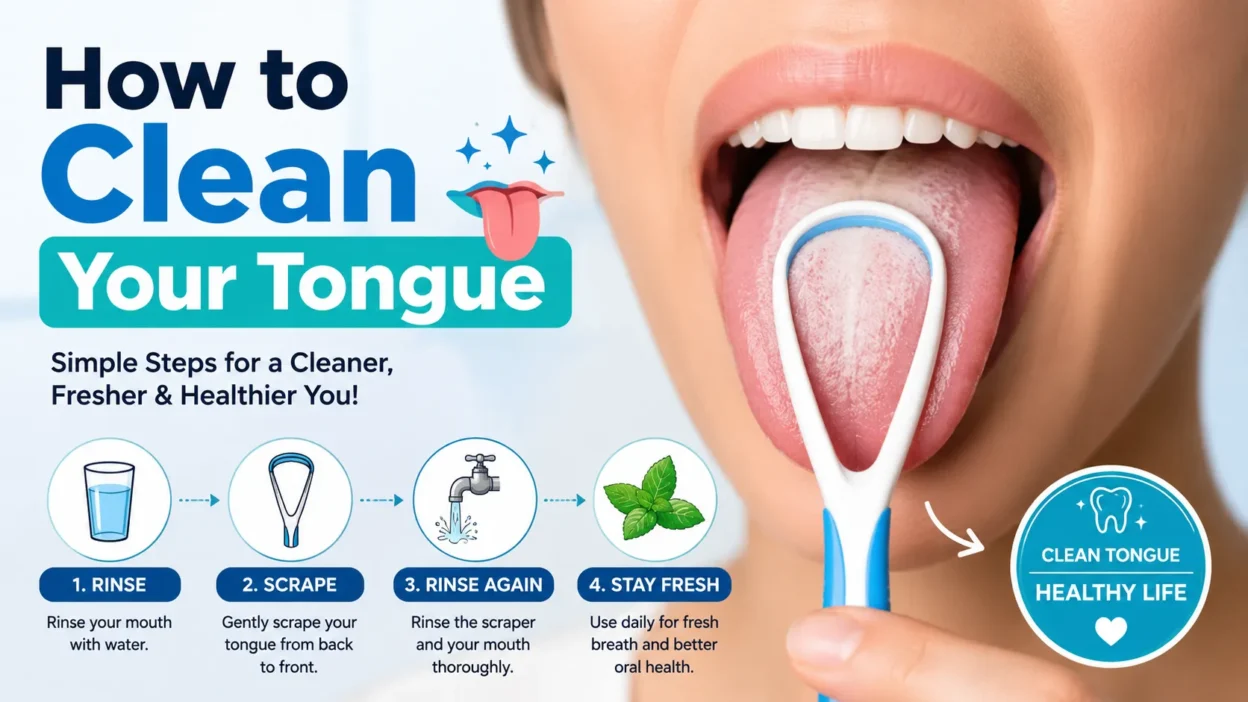
Getting the technique right makes a bigger difference than which tool you choose. Here’s how to do it properly:
- Time it right. Clean your tongue either before or after brushing your teeth whichever order you prefer, as long as it becomes a consistent part of the routine.
- Start at the back. Stick your tongue out and place the scraper or brush as far back as you can comfortably reach without triggering a strong gag reflex.
- Pull forward in one smooth stroke. Gently drag the tool from the back of the tongue toward the tip in a single, controlled motion, rather than short back-and-forth scrubbing.
- Use firm but gentle pressure. You want enough pressure to lift the coating off the surface, but not so much that it causes discomfort or irritation. The tongue’s tissue is more delicate than it looks.
- Rinse the tool between passes. Wipe or rinse off the film you’ve collected before scraping again reapplying a dirty tool just redistributes what you’re trying to remove.
- Repeat across the full surface. Cover the center of the tongue as well as both sides, doing 2–3 passes in each area until the coating is noticeably reduced.
- Finish with a rinse. Swish with water or mouthwash to clear away any remaining loosened debris.
Timing and Frequency
Morning cleaning is generally considered the most valuable time to do this, since bacteria accumulate steadily overnight while saliva production slows down during sleep. A morning scrape clears that buildup before it contributes to breath odor throughout the day.
Evening cleaning works well too, especially as part of a broader nightly routine alongside brushing and flossing, helping start the next day with a cleaner baseline.
For most people, once a day is sufficient there’s no real benefit to over-scraping, and doing it too frequently can lead to unnecessary irritation. If you notice a particularly heavy coating or persistent bad breath despite regular cleaning, it may be worth adjusting to twice a day and monitoring whether that resolves it.
Common Mistakes and How to Avoid Them
Even a simple habit like this has a few common pitfalls worth watching for:
- Scraping too hard. Pressing down aggressively can irritate the tongue’s tissue, cause minor bleeding, or even temporarily dull your sense of taste. More pressure isn’t more effective it’s just more likely to cause harm.
- Only cleaning the tip. The heaviest concentration of bacterial buildup tends to sit toward the back of the tongue, so stopping at the front leaves the bulk of the problem untouched.
- Using a tool that’s too abrasive. If a metal scraper feels harsh, switching to a softer brush-based option with lighter pressure is a reasonable trade-off that still gets the job done.
- Treating it as optional. Brushing your teeth simply doesn’t reach the tongue’s surface in any meaningful way the two are complementary steps, not redundant ones.
- Skipping the rinse between passes. Reusing a scraper without rinsing it just moves debris back onto the tongue instead of removing it.
Special Considerations
Managing the gag reflex. It’s common for the back of the tongue exactly where the buildup is worst to trigger gagging. Breathing steadily through the nose, angling the tool at a slight downward tilt, and building up tolerance gradually over several days can all help make the back of the tongue easier to reach over time.
Kids vs. adults. Children can benefit from tongue cleaning too, but a softer tool and lighter touch are appropriate, generally introduced once they’re old enough to manage the sensation without discomfort or distress. Adult supervision is recommended for younger kids just learning the habit.
Braces, dentures, and oral appliances. For people with braces, tongue cleaning is still fully compatible with a normal oral care routine, though extra care around brackets and wires may be needed while brushing. For denture wearers, tongue cleaning remains just as important, since bacteria on the tongue can still contribute to bad breath and oral bacterial load independent of the dentures themselves.
When a coated tongue might mean something more. Occasional white or yellow coating is normal and usually resolves with regular cleaning. However, a coating that’s unusually thick, persistent despite regular cleaning, accompanied by pain, or shows unusual discoloration or patchy patterns could point to something beyond ordinary buildup. In those cases, it’s worth mentioning to a dentist or doctor rather than assuming more aggressive scraping will resolve it.
Benefits Beyond Bad Breath
While fresher breath is the most immediate and noticeable benefit, tongue cleaning offers a few other advantages worth mentioning:
- Improved taste perception. Removing the coating that builds up over the taste buds can make food taste more vivid and distinct.
- Reduced bacterial load. Regular cleaning lowers the overall amount of bacteria living in the mouth, which supports broader oral hygiene efforts, including cavity and gum disease prevention.
- Less bacteria swallowed. Since debris on the tongue can otherwise be swallowed throughout the day, regularly removing it may contribute to general digestive comfort, though this is a secondary benefit rather than the primary reason to do it.
Conclusion
Cleaning your tongue is about as low-effort as oral hygiene habits come a 30-second addition to a routine you’re already doing every day. Yet it addresses one of the most common and persistent sources of bad breath, supports better taste perception, and rounds out a genuinely complete approach to oral health.
Paired with regular brushing and flossing, it’s a small habit with an outsized payoff. If it isn’t already part of your routine, there’s no better time to start than tomorrow morning.