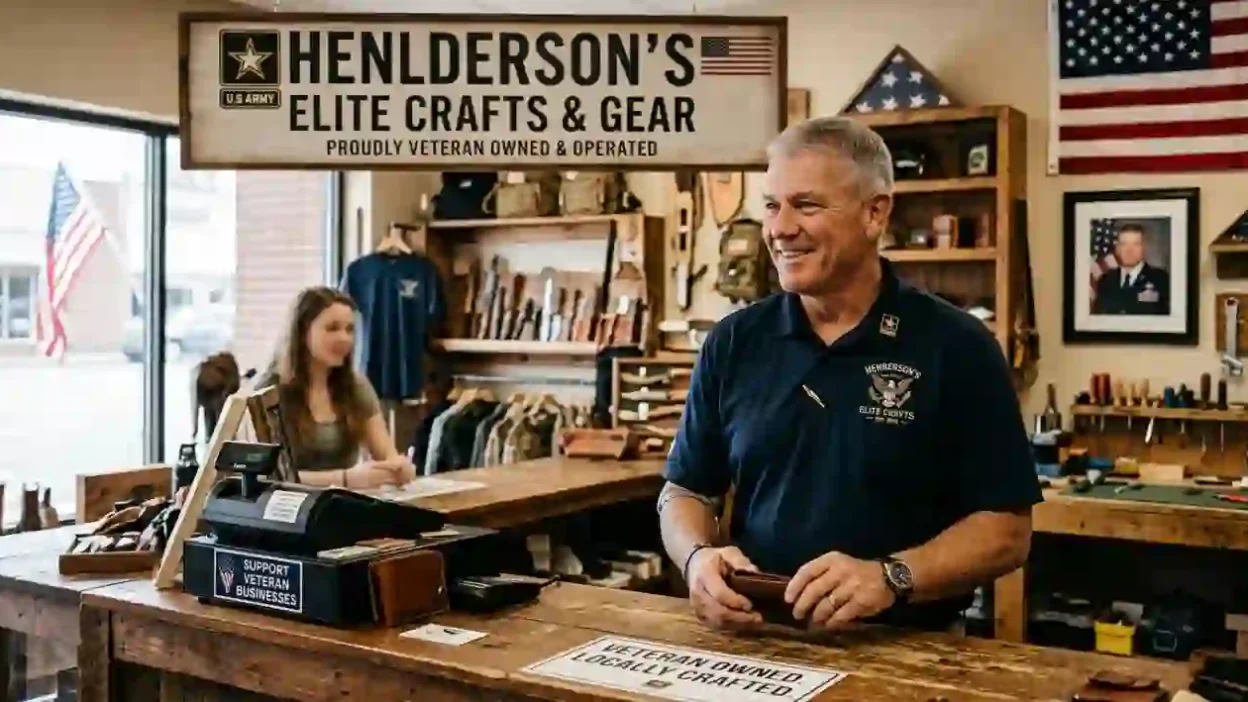
A veteran owned business is a company owned and operated by a person who has served in the U.S. military. These businesses span industries such as construction, retail, consulting, technology, and professional services. You can find veteran-owned businesses through online directories, local business networks, and government resources, and support them by becoming a customer.
Key Takeaways
- A veteran-owned business is owned by someone who served in the U.S. military.
- Veteran entrepreneurs work in nearly every industry, from retail to technology.
- Some businesses can qualify for veteran-owned or service-disabled veteran-owned certifications.
- The SBA and other organizations provide resources to help eligible veterans start and grow businesses.
- Customers can support veteran entrepreneurs by shopping locally, hiring their services, and recommending their companies.
Veteran Owned Business
Introduction
A veteran owned business is more than a company with a military connection. It is a business owned by someone who has served in the United States Armed Forces and decided to build a career through entrepreneurship.
Veterans bring a wide range of experiences to business ownership. Their backgrounds may include leadership, logistics, technology, communication, planning, and managing teams under pressure. These skills can be useful when starting and operating a company.
People search for veteran-owned businesses for several reasons. Some want to support military veterans, while others are looking for reliable service providers, local shops, contractors, or suppliers. Business owners may also want to learn about certification programs and government contracting opportunities.
This guide explains what a veteran-owned business means, how to find one, and what business owners should know about certification and available resources. It also shares practical ways customers and organizations can support veteran entrepreneurs throughout the United States.
What Does “Veteran Owned Business” Mean?
A veteran-owned business is a company in which a military veteran holds an ownership interest. The exact ownership and control requirements depend on the certification program, contract, or organization using the term.
These businesses can operate as sole proprietorships, limited liability companies (LLCs), partnerships, or corporations. Their owners may work in industries such as transportation, construction, restaurants, consulting, manufacturing, healthcare services, and online retail.
The term is commonly used in business directories, supplier databases, community promotions, and government procurement programs. However, a business describing itself as veteran-owned does not automatically qualify for every official certification or contracting benefit.
For example, the U.S. Small Business Administration (SBA) administers the Veteran Small Business Certification program, commonly called VetCert. Eligible businesses may seek certification as a Veteran-Owned Small Business (VOSB) or Service-Disabled Veteran-Owned Small Business (SDVOSB), depending on the owner’s circumstances and the program’s requirements.
Why Use Other Ways to Say “Veteran Owned Business”?
The phrase veteran owned business works well for general information and search queries. However, different situations call for different wording.
For example, a customer might want to recognize a veteran entrepreneur, while a government contractor may need to use an official certification term. Choosing the right phrase helps you communicate clearly and respectfully.
Here are a few reasons to use alternatives:
- Avoid repetition: Keep website content, business profiles, and marketing materials interesting.
- Improve clarity: Explain exactly who owns or manages the company.
- Match the audience: Use a professional term in proposals and a friendly phrase in social media posts.
- Recognize military service: Acknowledge a business owner’s background when relevant.
- Stay accurate: Distinguish general veteran ownership from verified certification.
10 Best Other Ways to Say “Veteran Owned Business”
The following alternatives have similar meanings, but they are not interchangeable in every situation. Choose wording that accurately describes the company’s ownership, leadership, and certification status.
1. Veteran-Owned Company
Meaning
A veteran-owned company is an organization owned by one or more military veterans. It is a clear, professional alternative that works well for business descriptions and general communication.
Best For: Professional, Formal, Friendly
Example 1: Our community directory features several veteran-owned companies offering home improvement services.
Example 2: We chose a veteran-owned company to supply equipment for our new office.
Quick Tip: Use this phrase in business profiles, supplier lists, and professional introductions.
2. Veteran-Owned Small Business
Meaning
This phrase describes a small business owned by a military veteran. In federal contracting, however, the term can carry specific eligibility requirements, so confirm the context before using it as an official designation.
Best For: Professional, Formal
Example 1: The purchasing team is researching veteran-owned small businesses for its next supplier review.
Example 2: She built a veteran-owned small business that provides cybersecurity consulting.
Quick Tip: When discussing federal contracting, check the company’s eligibility and certification rather than assuming that every veteran-owned company qualifies.
3. Business Owned by a Military Veteran
Meaning
This wording explains the ownership directly without relying on an industry label. It is easy to understand and works well for readers who may not know the terminology used in veteran business programs.
Best For: Formal, Friendly, Warm
Example 1: The neighborhood recently welcomed a business owned by a military veteran.
Example 2: We featured a business owned by a military veteran in our local shopping guide.
Quick Tip: Choose this option when clarity matters more than keeping the wording short.
4. Veteran-Led Business
Meaning
A veteran-led business emphasizes a veteran’s role in leading the organization. However, leadership does not necessarily mean ownership, so this phrase should only replace veteran-owned business when it accurately describes the company’s structure.
Best For: Professional, Friendly
Example 1: The conference invited veteran-led businesses to share their approaches to team management.
Example 2: Our networking event connects veteran-led businesses with potential partners.
Quick Tip: Use this phrase when the veteran’s leadership role is the main point you want to highlight.
5. Veteran-Owned Enterprise
Meaning
A veteran-owned enterprise is a company or commercial organization owned by a military veteran. The word enterprise gives the phrase a more formal tone and can suit corporate communications or business reports.
Best For: Professional, Formal
Example 1: The regional report highlights the growth of veteran-owned enterprises in the manufacturing sector.
Example 2: Our organization invited a veteran-owned enterprise to discuss its supply chain services.
Quick Tip: This wording fits formal documents better than casual conversations or everyday customer reviews.
6. Veteran Entrepreneur’s Business
Meaning
This phrase draws attention to the individual who started, owns, or operates the company. It works well when telling a founder’s story or describing the personal journey behind a business.
Best For: Friendly, Warm, Professional
Example 1: The magazine featured a veteran entrepreneur’s business that creates custom furniture.
Example 2: Customers can learn more about the veteran entrepreneur’s business through its founder profile.
Quick Tip: Use this wording when the owner’s experience and entrepreneurial journey are central to the story.
7. Military Veteran-Owned Business
Meaning
This phrase makes the connection between business ownership and military service especially clear. It can be useful in educational content, community directories, and articles that introduce readers to veteran entrepreneurship.
Best For: Formal, Professional
Example 1: Our guide explains how to locate military veteran-owned businesses across the state.
Example 2: The chamber of commerce added several military veteran-owned businesses to its directory.
Quick Tip: Use the fuller phrase when you want to remove any possible confusion about the type of veteran you mean.
8. Veteran-Owned Local Business
Meaning
This phrase combines veteran ownership with a local connection. It is useful for community campaigns and shopping guides that encourage people to purchase goods or services from businesses in their area.
Best For: Friendly, Warm, Casual
Example 1: We found a veteran-owned local business that repairs bicycles and sells accessories.
Example 2: The town’s holiday shopping campaign features veteran-owned local businesses.
Quick Tip: Use local only when the company genuinely serves or operates in the community being discussed.
9. Veteran-Founded Company
Meaning
A veteran-founded company is a business that a military veteran established. Unlike veteran-owned company, this phrase focuses on who started the business, not necessarily who owns it today.
Best For: Professional, Friendly
Example 1: The technology conference showcased a veteran-founded company developing software for small retailers.
Example 2: We read about a veteran-founded company that began in a home garage and later expanded nationwide.
Quick Tip: Verify the founder’s background and avoid suggesting current veteran ownership unless that remains accurate.
10. Service-Disabled Veteran-Owned Small Business (SDVOSB)
Meaning
This is a specific designation for an eligible small business that is at least 51% owned and controlled by one or more service-disabled veterans and meets the applicable program requirements. SBA certification can open opportunities to compete for certain federal contracts.
Small Business Administration+1
Best For: Professional, Formal
Example 1: The federal procurement team searched for certified service-disabled veteran-owned small businesses.
Example 2: The contractor reviewed the SBA requirements before applying for SDVOSB certification.
Quick Tip: Do not use this designation simply because a business owner is a veteran with a disability. Confirm eligibility and the company’s certification status.
Comparison Table
| Alternative | Best Used In | Tone |
|---|---|---|
| Veteran-Owned Company | Business profiles and directories | Professional |
| Veteran-Owned Small Business | Supplier research and contracting | Formal |
| Business Owned by a Military Veteran | Educational content and articles | Clear, friendly |
| Veteran-Led Business | Leadership profiles and networking | Professional |
| Veteran-Owned Enterprise | Reports and corporate documents | Formal |
| Veteran Entrepreneur’s Business | Founder stories and interviews | Warm |
| Military Veteran-Owned Business | Guides and community directories | Informative |
| Veteran-Owned Local Business | Local campaigns and shopping guides | Friendly |
| Veteran-Founded Company | Company histories and startup profiles | Professional |
| Service-Disabled Veteran-Owned Small Business (SDVOSB) | Eligible federal contracting opportunities | Official, formal |
Common Mistakes
Using the right terminology matters, particularly when discussing ownership, military service, and government contracting.
1. Using informal language in official documents. A phrase such as veteran-owned company may be suitable for a website, but a federal procurement document may require a specific certification designation.
2. Confusing ownership with leadership. A veteran-led company is not necessarily owned by a veteran. Check the company’s actual ownership before describing it as veteran-owned.
3. Assuming every veteran-owned business is certified. General veteran ownership does not automatically establish eligibility for a government program. Certification requirements must be met separately.
Small Business Administration+1
4. Using the same phrase repeatedly. Repeating one expression throughout a long article can make the writing sound unnatural. Vary the wording where appropriate, but keep the meaning accurate.
5. Using military service as a guarantee of quality. A veteran’s background may be an important part of a business story, but customers should still review experience, qualifications, references, pricing, and service quality.
Frequently Asked Questions
1. What is a veteran-owned business?
A veteran-owned business is a company owned by someone who has served in the U.S. military. These businesses operate in many industries, including construction, consulting, retail, transportation, and technology. Some qualify for special government programs, but official certification requires meeting specific ownership, control, and other eligibility rules.
2. How can I find a veteran-owned business near me?
Start by checking local chamber of commerce directories, business associations, and veteran entrepreneurship networks. You can also use the SBA’s Veteran Small Business Certification resources to search for certified businesses. Read customer reviews, confirm service areas, and contact companies directly to verify their offerings.
3. How do I verify whether a business is veteran-owned?
Ask the business owner about their military background and ownership structure. If you need to confirm eligibility for federal contracting, check the SBA’s official certification resources and applicable government business records. A company’s website or marketing statement alone may not establish that it holds an active government certification.
4. What is the difference between VOSB and SDVOSB?
A Veteran-Owned Small Business (VOSB) meets the applicable veteran ownership and control requirements. A Service-Disabled Veteran-Owned Small Business (SDVOSB) must also meet the program’s requirements concerning service-disabled veteran ownership and control. SBA certification provides access to certain contracting opportunities, with different benefits applying to each designation.
Small Business Administration+1
5. Can veteran-owned businesses receive government contracts?
Yes. Eligible and certified veteran-owned businesses can pursue certain government contracting opportunities. Certified SDVOSBs may compete for designated federal contracts, while certified VOSBs have specific opportunities through the Department of Veterans Affairs. Businesses should review the relevant eligibility rules, registration requirements, and contract terms before applying.
6. Are grants available for veteran-owned businesses?
Veteran entrepreneurs may find grants through selected nonprofit organizations, state and local programs, industry initiatives, and private foundations. However, there is no guarantee that a veteran-owned business will qualify for a grant. The SBA also provides training, counseling, and information about financing options that can help entrepreneurs choose an appropriate funding source.
Small Business Administration+1
7. How can I support a veteran-owned business?
You can support veteran entrepreneurs by purchasing their products, hiring their services, recommending them to friends, and leaving honest online reviews. Businesses can also include qualified veteran-owned suppliers in their procurement searches. Consistent customer support and fair business opportunities can help these companies build lasting relationships and grow.
8. What resources help veterans start a business?
The SBA offers resources through its Veterans Business Outreach Centers and entrepreneurship training programs. Eligible participants can explore Boots to Business, business planning assistance, mentoring, and guidance on financing and contracting. These resources can help veterans evaluate a business idea, understand startup requirements, and develop a practical growth plan.
Small Business Administration+1
Conclusion
A veteran owned business can take many forms, from a neighborhood repair shop to a growing technology company or a professional consulting firm. Choosing the right phrase depends on what you want to communicate. Veteran-owned company works well in general business writing, while veteran-founded company highlights the founder’s role and veteran-led business emphasizes leadership.
For formal procurement documents, accuracy matters even more. Terms such as VOSB and SDVOSB have specific requirements, so verify a company’s status before using an official designation.
If you want to support veteran entrepreneurs, consider shopping with their businesses, recommending their services, and including qualified suppliers in your purchasing decisions. If you are a veteran planning to launch a company, explore SBA training, business counseling, and certification resources before making major commitments.