
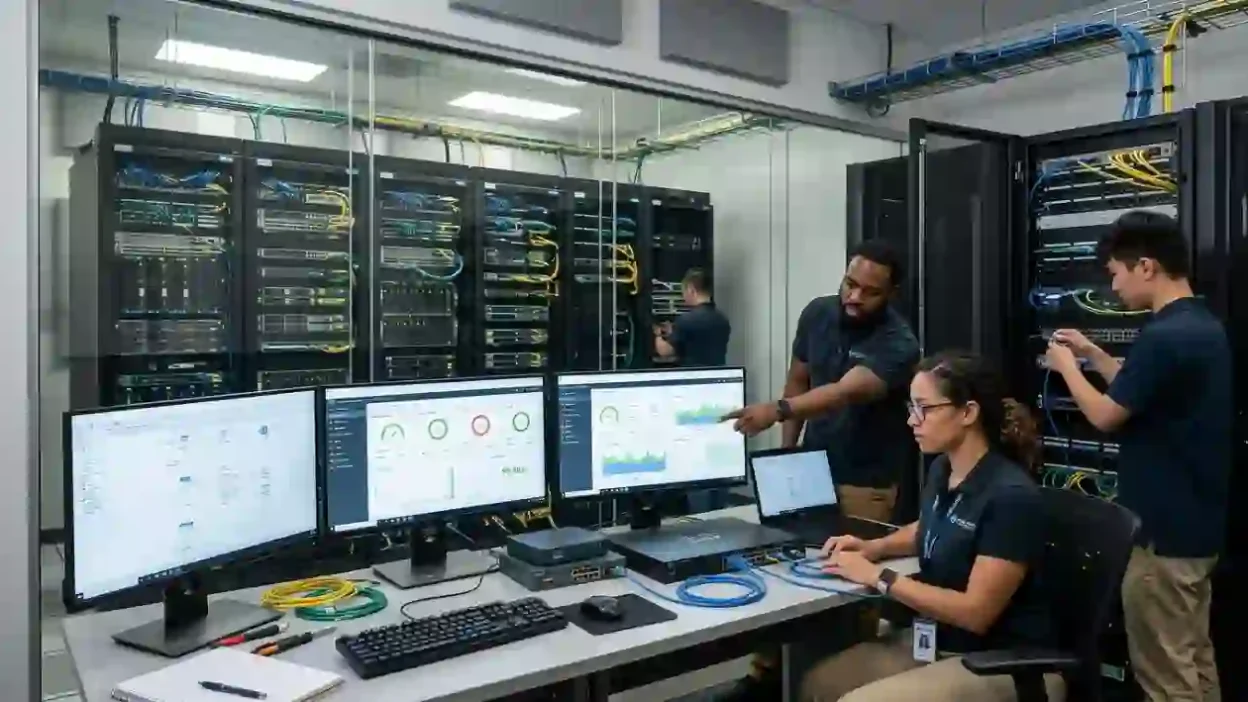
Business IT infrastructure refers to the hardware, software, networks, cloud services, and security systems that help a company manage daily operations. It supports communication, data storage, cybersecurity, employee productivity, and business applications. A reliable IT infrastructure helps businesses operate efficiently, protect information, and adapt to changing technology needs.
Key Takeaways
- Business IT infrastructure includes hardware, software, networks, servers, and cloud services.
- A reliable technology setup improves productivity and supports daily business operations.
- Strong cybersecurity protects company data, systems, and customer information.
- Cloud computing and managed IT services help businesses control costs and grow.
- Regular maintenance, monitoring, and upgrades keep IT systems secure and reliable.
Business IT Infrastructure
Introduction
Technology plays an important role in how modern companies operate. From employee communication to customer management, businesses depend on reliable technology to complete everyday tasks and serve their customers.
Business IT infrastructure describes the technology, equipment, software, and networks that keep these operations running. It creates the foundation for managing information, connecting employees, protecting business data, and supporting essential applications.
However, building the right technology environment can be challenging. Companies must choose suitable equipment, manage security risks, control costs, and prepare for future growth.
Understanding business IT infrastructure helps business owners make smarter technology decisions. This guide explains its main components, benefits, common alternatives, and practical ways to build an IT environment that supports long-term business success.
What Does “Business IT Infrastructure” Mean?
Business IT infrastructure refers to the complete collection of technology resources a company uses to manage its operations. These resources include computers, servers, software, internet connections, cloud platforms, databases, and security tools.
Businesses use this infrastructure to store information, communicate with customers, process transactions, manage employees, and run essential applications.
For example, a small accounting firm may use laptops, cloud storage, accounting software, secure internet connections, and backup systems. Together, these tools form its business IT infrastructure.
Companies use this technology foundation across industries, including healthcare, retail, finance, manufacturing, education, and professional services.
Why Use Other Ways to Say “Business IT Infrastructure”?
Using alternative phrases can make business communication clearer and more natural. The best wording depends on your audience and the specific technology you want to describe.
Different alternatives can help you:
- Avoid repeating the same technical phrase in articles and reports.
- Explain IT concepts to readers without technical experience.
- Make business proposals sound more professional.
- Describe specific technology systems more accurately.
- Improve readability in presentations, emails, and website content.
- Match terminology to different business and technology situations.
10 Best Other Ways to Say “Business IT Infrastructure”
1. Business Technology Infrastructure
Meaning
Business technology infrastructure describes the technology resources that support a company’s daily activities. It includes digital tools, computer systems, networks, and software used across different departments.
Best For: Professional, Formal
Example 1: Our company is upgrading its business technology infrastructure to improve employee productivity.
Example 2: Reliable business technology infrastructure helps growing companies manage their operations.
Quick Tip: Use this phrase when discussing technology as a complete business resource rather than focusing only on computers or networks.
2. Enterprise IT Infrastructure
Meaning
Enterprise IT infrastructure refers to the technology environment supporting large organizations and complex operations. It often includes multiple servers, cloud platforms, security systems, databases, and connected business applications.
Best For: Professional, Formal
Example 1: The organization needs stronger enterprise IT infrastructure to support its expanding workforce.
Example 2: Enterprise IT infrastructure plays an important role in managing information across multiple locations.
Quick Tip: Choose this phrase when discussing large companies, corporations, or organizations with complex technology requirements.
3. Corporate IT Infrastructure
Meaning
Corporate IT infrastructure describes the technology systems used to support a company’s internal and external operations. It covers communication networks, business software, computing equipment, and information security.
Best For: Professional, Formal
Example 1: The management team approved additional funding for corporate IT infrastructure.
Example 2: Better corporate IT infrastructure can improve collaboration between different departments.
Quick Tip: This expression works well in corporate reports, technology policies, and business presentations.
4. Business IT Systems
Meaning
Business IT systems refers to the technology tools and applications a company uses to complete everyday tasks. These may include accounting platforms, customer relationship management software, employee systems, and communication tools.
Best For: Professional, Casual
Example 1: Our business IT systems help employees manage customer information more efficiently.
Example 2: The company plans to replace outdated business IT systems next year.
Quick Tip: Use this phrase when referring to the software and technology applications employees use regularly.
5. Digital Infrastructure
Meaning
Digital infrastructure describes the connected technology resources that allow businesses to operate in a digital environment. It includes cloud services, online platforms, data systems, communication tools, and digital networks.
Best For: Professional, Formal
Example 1: Strong digital infrastructure allows the retailer to manage online orders more effectively.
Example 2: The company is investing in digital infrastructure to support its remote workforce.
Quick Tip: This phrase is useful when discussing cloud technology, digital services, and online business operations.
6. IT Environment
Meaning
An IT environment refers to the overall technology setting in which a business operates. It includes hardware, software, networks, databases, applications, and security configurations.
Best For: Professional, Casual
Example 1: Our IT team regularly monitors the company’s IT environment for security risks.
Example 2: A well-managed IT environment makes it easier to introduce new business applications.
Quick Tip: Use this expression when describing how different technology components work together.
7. Technology Systems and Networks
Meaning
Technology systems and networks describe the connected equipment, software, and communication channels that help businesses exchange information. These resources allow employees to access applications, share files, and communicate securely.
Best For: Professional, Friendly
Example 1: The IT department maintains our technology systems and networks to prevent service interruptions.
Example 2: Reliable technology systems and networks help our remote employees stay connected.
Quick Tip: Choose this phrase when discussing internet connectivity, internal networks, and communication systems.
8. Business Computing Infrastructure
Meaning
Business computing infrastructure focuses on the computers, servers, storage devices, and computing resources used to process business information. It provides the technical capacity needed to run applications and handle workloads.
Best For: Professional, Formal
Example 1: The company is expanding its business computing infrastructure to handle increased customer demand.
Example 2: Modern business computing infrastructure supports faster data processing and application performance.
Quick Tip: Use this alternative when discussing computing power, servers, data processing, and storage capacity.
9. IT Operations Environment
Meaning
An IT operations environment refers to the technology systems and processes used to keep business IT services running. It includes system monitoring, maintenance, network management, troubleshooting, and technical support.
Best For: Professional, Formal
Example 1: The IT manager introduced new monitoring tools to improve the IT operations environment.
Example 2: A stable IT operations environment helps employees complete their work without unnecessary interruptions.
Quick Tip: This phrase is particularly useful when discussing IT management, technical support, and system maintenance.
10. Technology Foundation
Meaning
A technology foundation is the basic collection of tools and systems that allows a business to use technology effectively. It provides the starting point for introducing new applications, improving workflows, and supporting company growth.
Best For: Friendly, Professional, Warm
Example 1: Reliable internet access and secure software create a strong technology foundation for our startup.
Example 2: The business needs a dependable technology foundation before expanding its online services.
Quick Tip: Use this expression when explaining technology investments to business owners or readers without a technical background.
Comparison Table
| Alternative | Best Used In | Tone |
|---|---|---|
| Business Technology Infrastructure | Business planning | Professional |
| Enterprise IT Infrastructure | Large organizations | Formal |
| Corporate IT Infrastructure | Corporate reports | Formal |
| Business IT Systems | Daily operations | Casual |
| Digital Infrastructure | Digital transformation | Professional |
| IT Environment | Technical discussions | Professional |
| Technology Systems and Networks | Network management | Friendly |
| Business Computing Infrastructure | Computing projects | Formal |
| IT Operations Environment | IT management | Professional |
| Technology Foundation | Business growth | Warm |
Common Mistakes
1. Treating Every Alternative as Identical
Not every phrase describes the same technology resources. For example, digital infrastructure often focuses on connected digital services, while business computing infrastructure emphasizes computing equipment and resources.
2. Using Technical Language With Every Audience
Business owners and general readers may not understand complicated IT terminology. Choose simple expressions when writing for people without technical experience.
3. Using Enterprise Terminology for Small Businesses
Enterprise IT infrastructure usually describes larger and more complex technology environments. Calling a small company’s basic computer setup enterprise infrastructure may create confusion.
4. Repeating the Same Phrase Too Often
Using business IT infrastructure in every sentence can make an article difficult to read. Introduce relevant alternatives naturally while keeping the original meaning clear.
5. Ignoring the Business Context
A phrase that works in a technical report may not fit a customer-facing email. Always consider the audience, purpose, and type of technology being discussed.
Frequently Asked Questions
1. What is business IT infrastructure in simple words?
Business IT infrastructure is the collection of technology tools a company uses to operate. It includes computers, internet connections, software, servers, cloud services, and security systems. These resources help employees communicate, manage information, serve customers, and complete everyday business tasks.
2. What are the main components of business IT infrastructure?
The main components include hardware, software, networking, data storage, cloud computing, and cybersecurity. Hardware includes computers and servers, while software provides the applications employees use. Networking connects devices, and security tools help protect company information from unauthorized access.
3. Why is IT infrastructure important for businesses?
IT infrastructure helps businesses operate efficiently and manage important information. It supports employee communication, customer service, data management, and business applications. A reliable setup also reduces technology interruptions, improves security, and gives companies the flexibility to expand their operations.
4. What is another name for business IT infrastructure?
Common alternatives include business technology infrastructure, corporate IT infrastructure, enterprise IT infrastructure, digital infrastructure, and business IT systems. The best option depends on the context. For example, digital infrastructure works well for online services, while enterprise IT infrastructure suits large organizations.
5. What is the difference between IT infrastructure and IT systems?
IT infrastructure refers to the underlying technology resources that support business operations, including networks, hardware, servers, and cloud services. IT systems generally refer to the connected applications and technology components used to perform specific tasks. Both work together to support business activities.
6. What does a small business need for IT infrastructure?
A small business typically needs reliable computers, internet access, business software, secure networks, data backups, and basic cybersecurity protection. Depending on its operations, it may also need cloud storage, communication platforms, customer management tools, and professional IT support.
7. How can businesses improve their IT infrastructure?
Businesses can improve their IT infrastructure by replacing outdated equipment, updating software, strengthening network security, and creating regular data backups. They should also monitor system performance, review access permissions, and plan technology upgrades based on business needs and available budgets.
8. Is cloud computing part of business IT infrastructure?
Yes. Cloud computing is an important part of modern business IT infrastructure. It allows companies to access computing resources, software, and storage over the internet instead of relying entirely on physical equipment. Cloud services can also support remote work, collaboration, and flexible business growth.
Conclusion
Business IT infrastructure provides the technology foundation that helps companies manage their daily operations. From computers and networks to cloud platforms and cybersecurity tools, every component plays a role in keeping business activities connected and organized.
Choosing the right terminology also makes business communication easier. Alternatives such as business technology infrastructure, enterprise IT infrastructure, digital infrastructure, and IT environment can describe different aspects of a company’s technology setup.
However, the best phrase depends on your audience and purpose. Use simple wording for general readers and more specific technical terms when writing reports or discussing IT projects.