
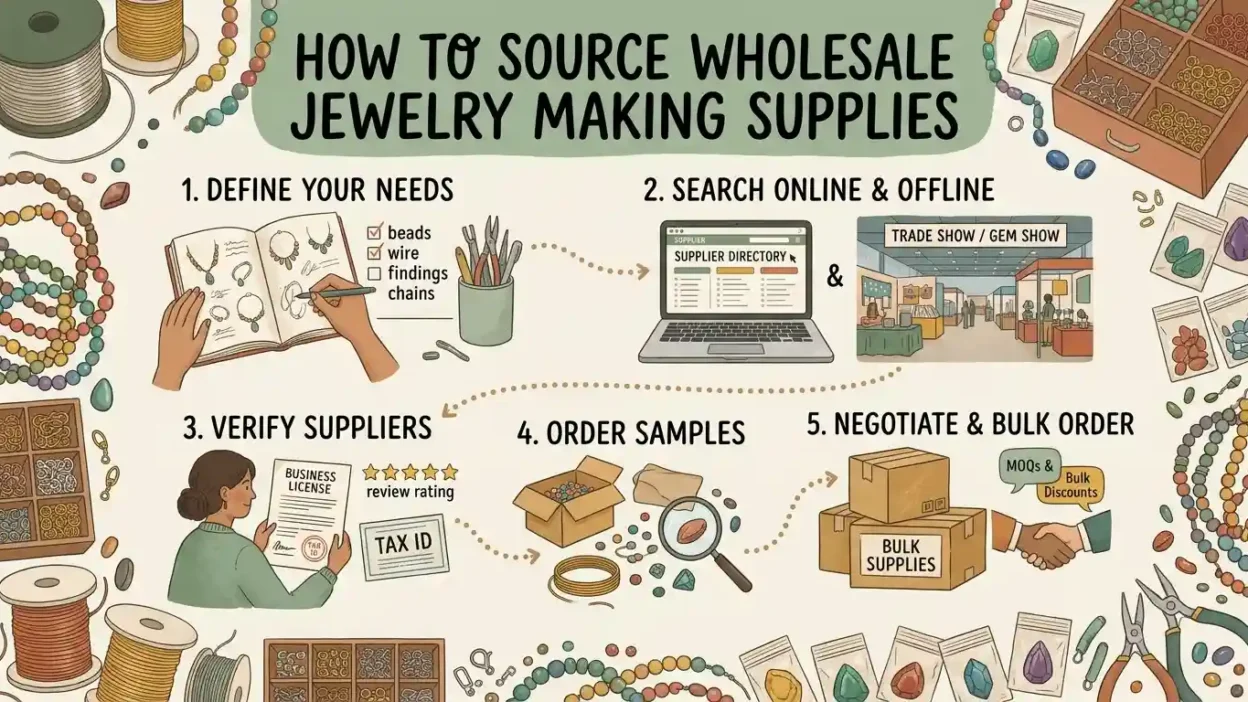
Finding reliable wholesale jewelry making supplies suppliers is essential for jewelry retailers, independent brands, online stores, and jewelry makers. The right sourcing partner can help businesses manage costs, expand product selections, and respond to changing market trends.
In 2026, B2B buyers can choose from global marketplaces, specialized wholesale platforms, and direct manufacturers. Each option offers different advantages in product variety, pricing, order flexibility, and sourcing efficiency. This guide compares popular sourcing channels and explains how to choose the right wholesale jewelry supplier for your business.
Why Wholesale Jewelry Sourcing Matters for B2B Buyers
Wholesale sourcing affects purchasing costs, inventory management, and profit margins. Businesses need suppliers that offer suitable products, consistent quality, and order terms aligned with their sales volume.
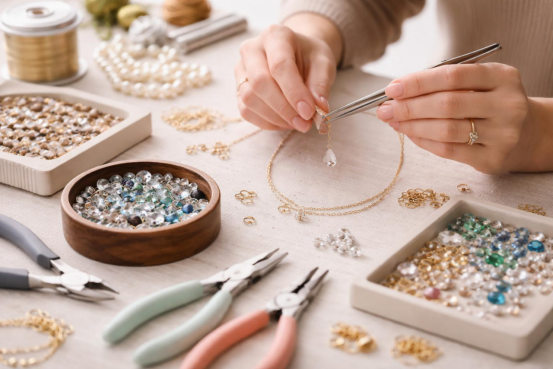
Jewelry makers may need beads, charms, chains, clasps, and other findings to produce their own designs. Retailers and resellers may prefer finished necklaces, earrings, bracelets, and rings that are ready for sale.
For B2B buyers, the goal is to find a reliable supply source that matches their business model rather than simply choosing the lowest unit price.
Where to Find Wholesale Jewelry Suppliers in 2026
Common sourcing channels include online B2B marketplaces, specialized wholesalers, manufacturers, and industry trade shows.
| Supplier or Platform | Main Focus | Best For |
| Alibaba | Global supplier and manufacturer marketplace | Comparing suppliers and sourcing larger orders |
| Faire | Wholesale marketplace connecting brands and retailers | Retailers looking for products from independent brands |
| PandaHall | Jewelry making supplies, beads, findings, and finished jewelry | Jewelry makers, retailers, and B2B resellers |
| Direct manufacturers | Production and potential customization | Businesses with specific product or manufacturing requirements |
| Jewelry trade shows | In-person product and supplier discovery | Buyers who want to inspect products and meet suppliers |
These options serve different sourcing needs. Buyers should compare product categories, order requirements, shipping costs, and supplier terms before making a decision.
1. Online B2B Marketplaces
Platforms such as Alibaba and Faire help buyers discover suppliers and compare products across different categories. Alibaba is often considered for manufacturer sourcing and larger-volume orders, while Faire connects retailers with wholesale brands.
However, product selection, pricing, minimum order quantities, and shipping arrangements vary by supplier. Buyers should verify these details rather than assume that every seller follows the same terms.
2. Specialized Jewelry Wholesale Platforms
Specialized platforms can be useful when a business needs multiple jewelry-related product categories from one source.
PandaHall offers a range of jewelry making supplies, including beads, charms, chains, and findings, as well as finished jewelry. This makes it relevant to B2B buyers who manufacture their own accessories and retailers who purchase ready-made products for resale.
Buyers can explore the catalog based on their product requirements and compare available prices, quantities, and shipping conditions before ordering.
3. Direct Manufacturers and Trade Shows
Direct manufacturers may be suitable for businesses requiring custom designs, specific materials, or larger production runs. Before placing an order, buyers should confirm MOQs, sample availability, production lead times, and quality control procedures.
Trade shows such as JCK Las Vegas and Vicenzaoro provide opportunities to inspect products in person and build supplier relationships. They can be valuable for detailed product evaluation, although travel and attendance costs should be considered.
How to Choose the Right Wholesale Jewelry Supplier
Before establishing a B2B purchasing relationship, evaluate suppliers using these criteria:
Product quality: Check material specifications, dimensions, finishes, and consistency. Request samples when appropriate.
Wholesale pricing: Compare unit prices alongside shipping, import costs, and other purchasing expenses.
Minimum order quantities: Choose order requirements that match your budget and inventory strategy.
Product range: Determine whether the supplier offers the jewelry components or finished products your business needs.
Shipping and reliability: Review delivery estimates, stock availability, communication, and return policies.
Business suitability: Consider whether the supplier can support your current purchasing needs and potential growth.
The best supplier is not necessarily the cheapest. Total purchasing costs, product suitability, and reliable fulfillment all contribute to a sustainable sourcing strategy.
Jewelry Making Supplies vs. Finished Jewelry
B2B buyers should also distinguish between sourcing components and purchasing ready-made accessories.
| Product Category | Examples | Typical Buyers |
| Jewelry making supplies | Beads, pendants, chains, clasps, and earring findings | Jewelry designers, craft businesses, and small manufacturers |
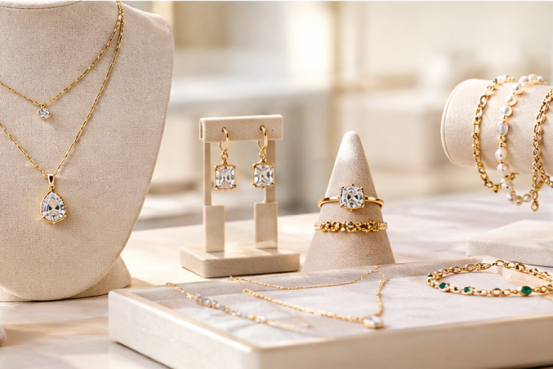
| Finished jewelry | Earrings, necklaces, bracelets, rings, and jewelry sets | Boutiques, online stores, and resellers |
Jewelry makers can source beads, chains, charms, and other findings to create their own designs, while retailers may prefer ready-to-sell products. For businesses looking to expand their retail collections, PandaHall’s wholesale jewelry collection offers another option for sourcing finished accessories, including necklaces, earrings, bracelets, and more.
Conclusion
Sourcing wholesale jewelry making supplies in 2026 requires balancing product quality, pricing, order flexibility, and supplier reliability. Alibaba, Faire, PandaHall, direct manufacturers, and trade shows offer different ways to find products for different B2B purchasing needs.
For jewelry makers seeking components and retailers looking for finished accessories, PandaHall is one platform worth comparing with other sourcing options. By evaluating suppliers against consistent criteria and matching orders to actual demand, businesses can make more informed purchasing decisions and build a more flexible wholesale sourcing strategy.