
Cutting down a tree isn’t just a matter of calling the first company that shows up in a search result. Prices swing wildly depending on the size of the tree, where you live, how hard it is to reach, and whether you even need a permit to do it legally.
This guide walks through every factor that affects the price, plus the permits, insurance rules, and money-saving tips most cost guides skip.
National Average Cost at a Glance

In 2026, homeowners across the U.S. pay somewhere between $300 and $1,500 for a standard residential tree removal, with the national average landing close to $900. That said, the true range is much wider a small, easy-to-reach tree might run as little as $150, while a large, hazardous, or hard-to-access tree can climb past $4,000–$5,000.
| Price Tier | Typical Range |
| Low end (small/easy) | $150 – $450 |
| National average | ~$750 – $900 |
| High end (large/complex) | $1,500 – $5,000+ |
Treat any number you see online as a starting point, not a quote. Local labor rates, tree condition, and accessibility will move the final price more than any national average can predict.
Cost by Tree Size
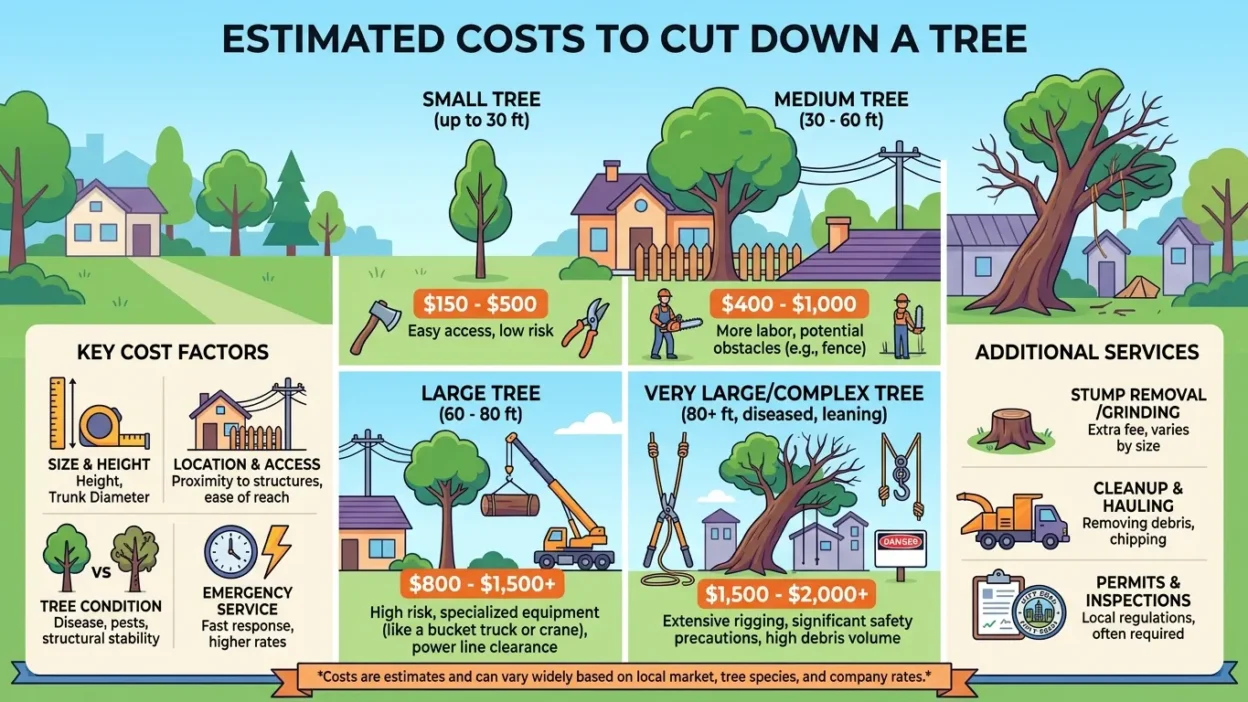
Size is the single biggest factor in tree removal pricing, because it determines how much labor, equipment, and time the job takes.
| Tree Height | Description | Estimated Cost |
| Under 30 ft | Small ornamental or young trees | $150 – $450 |
| 30–60 ft | Medium residential trees | $450 – $1,200 |
| 60–80 ft | Large trees | $1,000 – $2,000 |
| Over 80 ft | Very large or mature trees | $1,160 – $4,000+ |
Companies often charge by the foot for taller trees, so a towering shade tree like an oak or elm will almost always cost more than a compact flowering tree of similar age.
Cost by Tree Type and Species
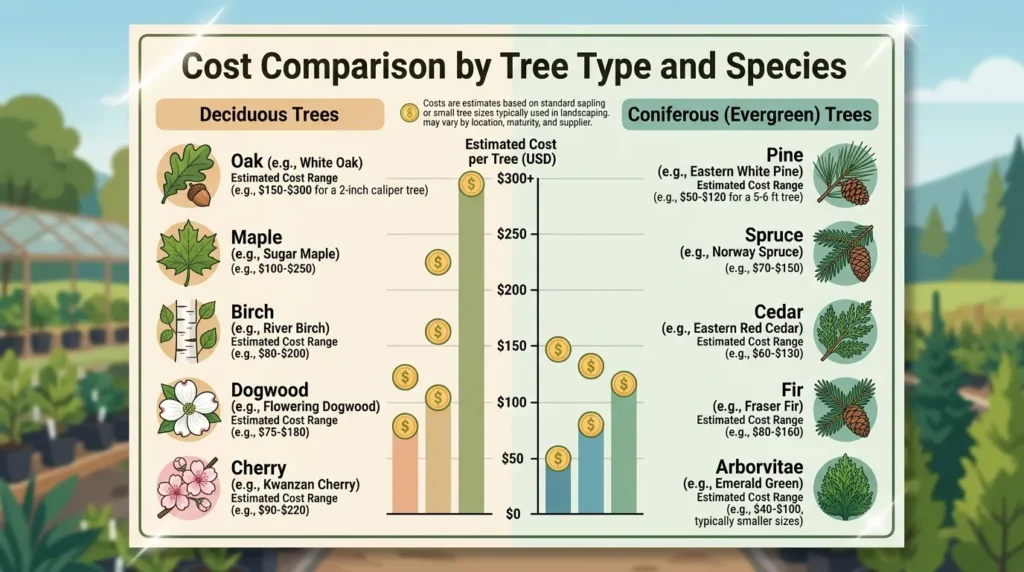
The type of tree affects both the difficulty of removal and the price. A few things to know:
- Palms and fig trees tend to be more expensive because of their extensive, tangled root systems, which make full removal more labor-intensive.
- Softwood trees (like pine) are generally quicker and cheaper to fell than dense hardwoods.
- Protected or heritage species (see the permits section below) may come with extra fees for arborist consultations even before removal begins.
If you’re not sure what species you’re dealing with, most tree service companies will identify it for free as part of an on-site quote.
The Full List of Cost-Driving Factors
Beyond size and species, several other variables shape your final bill:
- Proximity to structures or power lines. A tree leaning toward your house or a utility line requires slower, more careful removal techniques usually piece-by-piece instead of a single fell which drives up labor time and cost.
- Accessibility. If a crew can’t get a truck or chipper close to the tree, expect longer job times and higher labor charges.
- Equipment needs. Taller or awkwardly positioned trees often require a crane or cherry picker, which can add roughly $500 to the total.
- Tree health and condition. Dead, diseased, or storm-damaged trees can be more unpredictable to remove safely, sometimes raising the price.
- Root system complexity. Extensive or invasive root systems add time to both removal and any follow-up stump work.
- Number of trees removed at once. Removing several trees in a single visit is usually cheaper per tree than scheduling separate jobs.
Regional and State Price Differences
Where you live matters almost as much as the tree itself:
- California: $1,200 – $3,500 (higher demand and labor costs)
- Midwest states: $500 – $1,500 (lower labor and operational costs)
- Southern states: $700 – $2,000 (higher tree density, but generally lower overall costs)
These differences come down to local labor markets, climate, tree density, and insurance/liability costs specific to each region. The only way to know your real number is to get quotes from companies actually operating in your area.
Add-On and Related Costs
The quoted “removal” price often doesn’t include everything. Budget for these extras:
- Stump grinding: roughly $33 – $264, depending on the trunk’s diameter
- Full stump removal (digging out the root ball instead of grinding): typically costs more than grinding and takes longer
- Debris hauling: many companies charge separately for logs, branches, and wood chip removal always ask if it’s included
- Already-fallen trees: if the tree is already down, removal is simpler and typically runs $90 – $300
- Bulk or lot clearing: for multiple trees on acreage, expect $850 – $6,000 per acre depending on tree density
- Emergency removal: storm damage or a tree threatening to fall can double or triple standard pricing, sometimes reaching $5,000, due to the urgency and risk involved
Permits, Regulations, and Legal Considerations
This is the part most cost guides skip and it can make or break your budget.
Do you need a permit? It depends entirely on your city or county. In many places, routine pruning doesn’t require a permit, but removing a mature tree above a certain trunk diameter often does. Diameter thresholds commonly fall between 6 and 12 inches, though this varies widely by municipality.
Heritage and protected trees. Many cities maintain a list of “heritage” or protected trees based on size, species, age, or historical value. Removing one of these without approval can bring steep fines in some cities, penalties can reach tens of thousands of dollars per tree.
Dead or hazardous trees. Most jurisdictions make exceptions for trees that are dead or pose an immediate hazard, allowing removal without a permit. However, if the tree is near power lines, you’ll usually still need to hire a licensed professional regardless of permit status.
Typical permit costs. Where required, permit fees generally range from $50 to $500, depending on the city and the number or size of trees involved. Heritage tree removals may carry additional fees for required arborist reports.
HOA rules. If you live in a community with a homeowners association, don’t assume city rules are the only ones that apply HOAs frequently have their own tree removal restrictions layered on top of local ordinances.
Bottom line: Before scheduling removal, check your city or county’s tree ordinance a five-minute search or phone call can save you from a fine that costs far more than the removal itself.
Insurance Coverage
Homeowner’s insurance can sometimes offset the cost, but not always:
- If a tree falls on an insured structure (your home, garage, fence) due to a covered peril like a storm or lightning, insurance typically covers removal.
- If you’re removing a healthy standing tree or even a dead one that hasn’t caused damage yet that cost is usually not covered and comes out of pocket.
If you’re filing a claim, document the damage with photos and, where possible, get a written assessment from a certified arborist to support your case.
DIY vs. Hiring a Professional
It’s tempting to save money by renting a chainsaw and doing it yourself, but this is one home project where the math doesn’t always favor DIY.
When DIY might make sense:
- The tree is small (well under 30 feet)
- It’s far from your house, power lines, fences, or your neighbor’s property
- You have a clear, safe fall zone and know how to read the tree’s lean
When you should hire a professional, no exceptions:
- The tree is tall, leaning, or near power lines
- It’s close to your home, garage, or any structure
- The tree is dead, diseased, or storm-damaged (unpredictable structural integrity)
- You don’t have the right safety equipment or experience
If something goes wrong during a DIY removal, the resulting property damage or injury can easily cost far more than a professional would have charged in the first place.
How to Choose a Tree Removal Company
Not all quotes are created equal. Before hiring:
- Look for certification. An ISA-certified arborist (International Society of Arboriculture) signals real training, not just a chainsaw and a truck.
- Verify insurance and licensing. Ask for proof of liability insurance if a tree damages your property or a worker is injured, you don’t want to be liable.
- Get multiple quotes. Aim for at least two to three written estimates before choosing a provider.
- Watch for lowball quotes. A price far below everyone else’s often means missing insurance, inexperienced crews, or hidden fees for stump grinding and debris removal added later.
How to Save Money on Tree Removal
A few practical ways to bring the price down without cutting corners on safety:
- Schedule in the off-season. Demand (and pricing) often eases outside of storm season and peak summer months.
- Bundle services. Combining removal, stump grinding, and debris hauling into one visit is usually cheaper than booking them separately.
- Handle your own cleanup. If you’re comfortable hauling branches and mulch yourself, ask whether the company will lower the price for skipping debris removal.
- Coordinate with neighbors. If a neighbor also needs tree work, scheduling jobs together can reduce mobilization costs for both of you.
- Compare quotes and negotiate. Written estimates give you leverage don’t be afraid to ask if a company can match a competitor’s price.
Environmental and Replanting Considerations
A few things worth thinking about before you commit to removal:
- Replanting requirements. Some local ordinances require replacing a removed tree with a new one, particularly for protected or heritage species.
- Reuse options. Leftover wood can often be repurposed as firewood, mulch, or even furniture-grade lumber for larger hardwoods ask your tree service if this is an option before they haul everything away.
- Alternatives to full removal. In some cases, professional pruning, cabling, or even relocation (for smaller trees) can address safety concerns without full removal worth asking an arborist about if you’re on the fence.
FAQs:
How much does it cost to cut down a tree per foot?
Many companies price by height rather than a flat per-foot rate, but as a rough guide, expect somewhere in the range of $10–$25 per foot depending on size, species, and accessibility.
Do I need a permit to remove a tree on my own property?
Often, yes especially for larger or protected trees. Requirements vary by city and county, so check your local ordinance before scheduling removal.
Does homeowners insurance cover tree removal?
Usually only if the tree fell and damaged an insured structure due to a covered event like a storm. Removing a healthy or already-dead standing tree is typically not covered.
How much does stump grinding cost separately?
Generally $33–$264, depending on the stump’s diameter and how deep you want it ground.
Is it cheaper to remove multiple trees at once?
Yes bundling multiple trees into a single visit usually reduces the per-tree cost compared to scheduling separate jobs.
How much does emergency tree removal cost?
Emergency removal (storm damage, a tree about to fall) can cost significantly more than standard removal sometimes up to $5,000 due to the urgency and risk involved.
Coclusion:
Tree removal costs vary more than almost any other home service, because so much depends on factors unique to your specific tree and property. As a general rule: know your tree’s size and location relative to structures, check your local permit requirements before you do anything else, and always get at least two or three written quotes before committing. That combination will get you the most accurate and often the most affordable price for the job.